Your shopping bag is empty.
Explore productsBuyer guides
Freshwater Pearl Earrings Wholesale: What 105 Listings Actually Cost
By Alex, Founder, AdornTrade 2026-09-04 9 min read
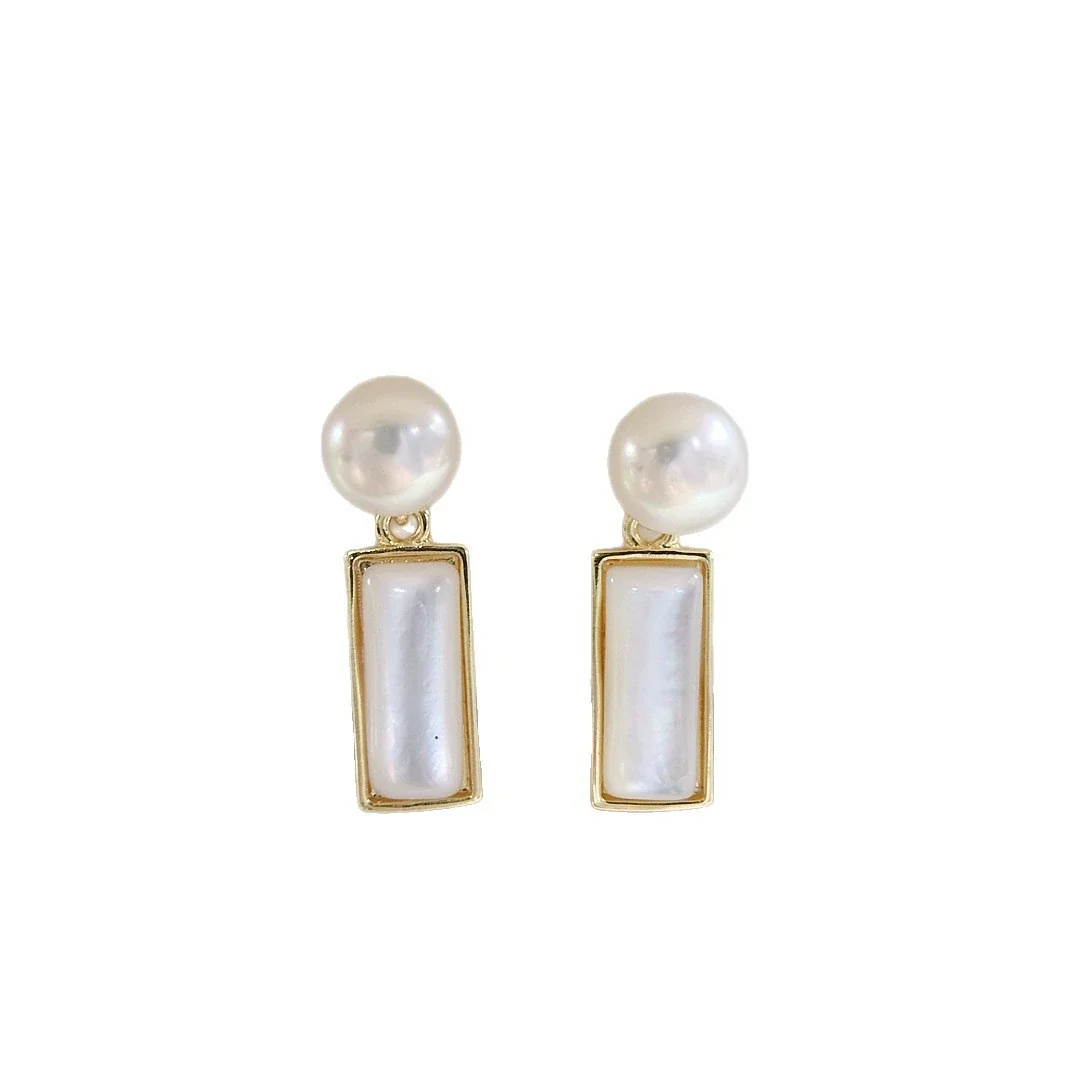
Freshwater pearl earrings are the one product where a wholesale buyer can see the whole supply chain's habits in a single listing: the pearl is described in adjectives, the metal is described by its colour, and the price is quoted for the smallest pearl in the range. None of that is dishonest. All of it makes two suppliers hard to compare.
This guide gives you the numbers from our own shelf, 105 published freshwater pearl earrings wholesale listings as of 4 September 2026, so you can see what actually moves the price, what a pearl record can and cannot tell you, and where the quantity steps are worth taking. Everything here can be checked against the pearl earrings category itself.
What freshwater pearl earrings cost at wholesale
Across 105 listings, the single-pair price runs from $0.60 to $35.24 with a median of $4.76. Fifty-three listings are under $5, 6 are under $3, and only 9 pass $13. That is a narrower and lower band than most buyers expect from the word pearl, and the reason is that these are cultured freshwater pearls in plated fittings, not saltwater pearls in silver or gold.
The price is set by construction first and by the pearl second.
| Construction | Listings | Lowest | Median | Highest |
|---|---|---|---|---|
| Stud or post | 70 | $0.60 | $4.63 | $9.05 |
| Hoop or huggie | 6 | $0.83 | $11.91 | $18.57 |
| Hook-wire drop | 5 | $5.48 | $6.67 | $35.24 |
| Closure not recorded | 24 | $4.29 | $5.24 | $21.62 |
| All | 105 | $0.60 | $4.76 | $35.24 |
Studs are 70 of the 105 listings and they are the cheap end: median $4.63, nothing above $9.05. The 6 pearl hoop earrings are few but dear, median $11.91, because a hoop is mostly metal and setting work with the pearl as an accent. The 5 pearl drop earrings on hook wires include the dearest pair on the shelf, a $35.24 round freshwater pearl hook drop whose larger variant is $47.38.
Cut-stone accents matter less than buyers assume. Seventy-nine listings carry cubic zirconia or crystal accents and their median is $5.00; the 26 pearl-only designs have a median of $4.52. Forty-eight cents at the median is what pavé adds on this shelf.
Why the cheapest pair is $0.60 and the dearest is $35.24
The $0.60 pair is a silver-plated stud with a small pearl in a halo frame. The $35.24 pair is a hook drop with a large round freshwater pearl. Both are recorded as freshwater pearl, both are plated. The difference is the pearl, and the pearl record explains it.
Shape comes first. Button and flat-round pearls, the shapes that come out of a freshwater mussel most often, are recorded on 80 of the 105 listings and their median is $4.76. Baroque pearls, irregular and set one at a time, are recorded on 12 listings with a median of $7.15 and a floor of $5.95. Round and near-round pearls appear on only 7 listings, and they span the whole band from $0.60 to $35.24, because a small round pearl is cheap and a large one is not.
Size comes second. A pearl size is recorded on 95 of the 105 listings, from 3 mm to under 16 mm. The distribution is tight in the middle:
- 7 mm to under 8 mm: 31 listings, the most common band
- 6 mm to under 7 mm: 20 listings
- 8 mm to under 9 mm: 10 listings
- 9 mm to under 10 mm: 9 listings
- Under 6 mm: 15 listings
- 12 mm and above: 10 listings, of which 7 are 15 mm to under 16 mm
Two listings that both say freshwater pearl stud can therefore be a 4 mm button pearl and a 15 mm baroque, and no price comparison between them means anything until you have read the size band. When you compare wholesale pearl stud earrings from two suppliers, compare at a stated shape and a stated millimetre band, or you are comparing a chip to a marble.
What the pearl record does and does not say
Each of our listings carries the pearl attributes the source factory recorded: shape on 97 listings, size band on 95, colour where stated, and a pearl type on 38. The material record reads "Freshwater pearl" on 91 listings and "Pearl" on 14, and freshwater is named in the title or text of most of those 14.
Here is what the record does not include, and therefore what our listings do not claim:
- No grade. Letter grades for pearls are not a standard; every supplier defines its own. None of the 105 records carries one, so none of our listings does.
- No luster or nacre rating. Luster is, by GIA's account, probably the most important of the seven pearl value factors, and it is also the one a factory record almost never quantifies. We describe what the photographs show and stop there.
- No farm or region of origin. GIA names China as the leading producer of freshwater cultured pearls, but the record does not say which farm or province, so the listing does not either.
- No treatment statements. Where a record does not state a treatment we do not state one, and we do not state its absence either.
One point of wording matters if you sell in the United States. The FTC Jewelry Guides define a pearl as a concretion formed without human intervention and a cultured pearl as one grown around a nucleus planted by a person, and they say it is deceptive to use the word pearl for a cultured pearl unless it is immediately preceded by cultured or an equivalent, and deceptive to describe a cultured pearl as natural. Freshwater pearls in commercial jewelry are cultured. Our category is titled natural stone and pearl because the word natural belongs to the stone side; your own product copy should say cultured freshwater pearl. Fourteen source records on this shelf use the phrase natural cultured, which is a contradiction in those terms, and we treat that wording as a record error rather than a claim.
The fittings: plated, and mostly unrecorded underneath
Every earring on this shelf is on plated metal. Gold-plated fittings are recorded on 80 listings and silver-plated on 29; many designs offer both through the Color option, which is why 105 listings carry 217 variants.
The metal under the plating is stated on 3 listings: 2 record a 925 silver post and 1 records copper. The other 102 record only the plating colour. That is the honest state of the source data, and it has a practical consequence. Do not describe a pearl earring from this shelf as silver, sterling, or gold in your own listings unless you are describing the plating colour, and if a customer asks what the post is made of, the answer for 102 of these designs is that the record does not say.
Where the substrate matters to your customers, the 925 sterling silver earrings shelf carries 35 listings with a median of $8.51 and a metal record on every one. The gap between $4.76 and $8.51 is the price of a recorded metal.
Quantity steps on a pearl earring order
All 217 published variants in this cell carry the same two quantity steps, printed on the listing rather than negotiated: the 3-pair unit price is 93.75% of the single price and the 8-pair unit price is about 81.3%, ranging from 80.0% to 81.9% across listings. Quantity prices at 3 and 8 units apply only where a listing displays them. There is no store-wide minimum, so a single pair is a valid order; the order quantity page sets this out in full.
| Listing | 1 pair | 3 pairs | 8 pairs | Saving at 8 |
|---|---|---|---|---|
| Cheapest pearl stud | $0.60 | $0.56 | $0.49 | $0.11 |
| Median pearl earrings | $4.76 | $4.46 | $3.87 | $0.89 |
| Median baroque design | $7.15 | $6.70 | $5.81 | $1.34 |
| Median hoop | $11.91 | $11.17 | $9.68 | $2.23 |
| Dearest hook drop | $35.24 | $33.04 | $28.64 | $6.60 |
The 3-pair step saves 30 cents on the median pair. It is not worth planning an order around. The 8-pair step saves 89 cents on the median pair and $2.23 on the median hoop, and that is the step that changes what you can retail at. The sensible pattern is one pair to check the pearl and the post in hand, then eights of the designs that sell.
A worked first order in pearl earrings
Pearl studs are the cheapest way to put a pearl assortment in front of customers, because 70 of the 105 listings are studs and their median is $4.63. A first order that covers the shelf's range at the 8-pair step:
| Line | Unit at 8+ | Pairs | Line total |
|---|---|---|---|
| Median pearl stud | $3.76 | 8 | $30.08 |
| Median pearl earrings with CZ accents | $4.06 | 8 | $32.48 |
| Median baroque design | $5.81 | 8 | $46.48 |
| Median hoop | $9.68 | 8 | $77.44 |
| Total | 32 | $186.48 |
Thirty-two pairs across four constructions for $186.48 in goods. Shipping is quoted separately at checkout against the destination and is not included. Drop the hoops and the same 24 pairs cost $109.04, which is the version most new sellers should start with.
Where pearl earrings sit against the other materials
The median pair by material, cheapest variant per listing, as of 4 September 2026: copper $1.12 across 24 listings, stainless steel $3.86 across 87, freshwater pearl $4.76 across 105, 925 sterling silver $8.51 across 35, moissanite $15.19 across 123. Pearl sits just above steel and at about half of silver, which is exactly what a plated fitting with a cultured pearl should cost.
Five partner factories supply the 105 listings. Each listing names its own source, and a stated source applies only to that listing; it is not a claim about the factory's other goods.
The short version
Buying freshwater pearl earrings at wholesale well comes down to reading three fields before the price: the pearl shape, the millimetre band, and whether the metal under the plating is recorded at all. On this shelf those fields are on the listing, the price band is $0.60 to $35.24 with a median of $4.76, and the 8-pair step is the only quantity step worth planning around. Say cultured in your own copy, do not say natural, and do not say silver unless the record does.
Accuracy reviewed by: Alex, Founder, AdornTrade
Sources
From the catalogue