Your shopping bag is empty.
Explore productsBuyer guides
Wholesale Jewelry With No Minimum Order: What a First Order Costs
By Alex, Founder, AdornTrade 2026-08-31 8 min read
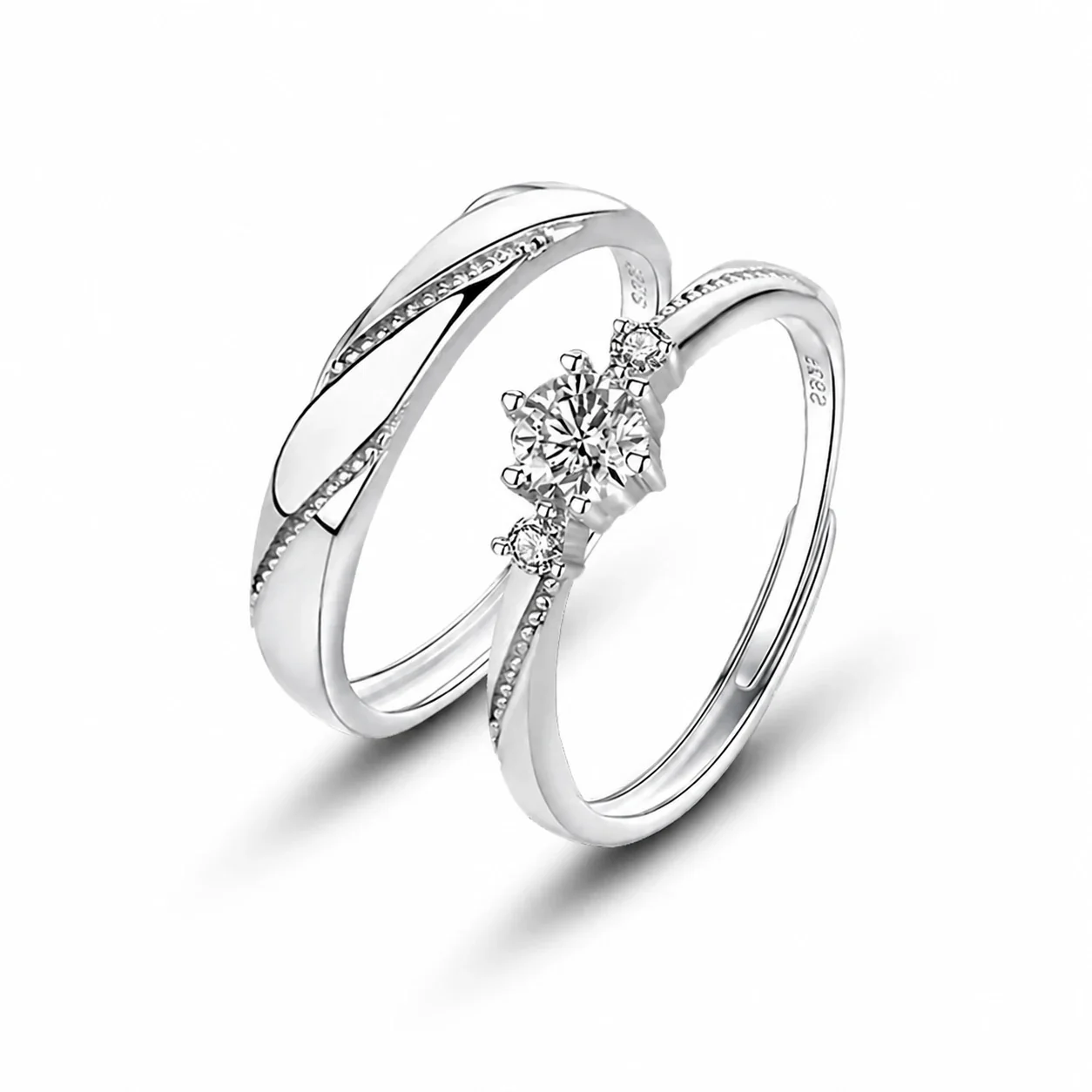
Most wholesale jewelry pages tell you to “contact us for pricing.” That is not useful when you are deciding whether to start at all. So this guide does the opposite: it publishes the actual per-piece price bands from our own catalogue — 1,090 listings and 3,479 published variants as of 1 September 2026 — and walks through what a first order of about $200 buys across five material families.
It is written for someone searching for a wholesale fashion jewelry supplier with no minimum order for the first time, and who wants to know the real cost of testing a few styles before committing any inventory budget. The numbers are the same ones a buyer of any size sees.
The numbers below are medians and ranges taken directly from the live catalogue, not illustrative examples. You can open any category page and check them.
What one piece actually costs, by material
The most useful comparison for a new buyer is not “how cheap can jewelry get” but “what does the same product type cost in different metals.” Rings make the cleanest comparison because every material family carries them.
| Rings, by material | Listings | Lowest | Median | Highest |
|---|---|---|---|---|
| Copper | 120 | $0.63 | $1.16 | $3.10 |
| Stainless steel | 12 | $2.74 | $3.52 | $5.38 |
| Natural stone | 31 | $0.90 | $3.81 | $9.05 |
| 925 sterling silver | 19 | $6.25 | $8.06 | $23.50 |
| Moissanite | 46 | $7.33 | $19.95 | $55.90 |
A median copper ring is $1.16. A median silver ring is $8.06 — 6.9 times as much for a product that looks broadly similar in a photograph, which is exactly why photographs are a poor way to judge a supplier’s price level.
Earrings follow the same ordering with a different spread. Necklaces very nearly do, with one instructive exception — natural stone overtakes silver, because a stone necklace carries far more material than a stone ring does:
| Earrings | Listings | Lowest | Median | Highest |
|---|---|---|---|---|
| Copper | 24 | $0.45 | $1.05 | $2.62 |
| Stainless steel | 76 | $0.86 | $3.93 | $7.74 |
| Natural stone | 105 | $0.60 | $4.76 | $47.38 |
| 925 sterling silver | 11 | $3.41 | $5.05 | $9.72 |
| Moissanite | 123 | $6.14 | $14.24 | $60.90 |
| Necklaces | Listings | Lowest | Median | Highest |
|---|---|---|---|---|
| Copper | 41 | $1.07 | $1.55 | $4.29 |
| Stainless steel | 59 | $0.19 | $5.62 | $31.43 |
| 925 sterling silver | 101 | $5.07 | $12.16 | $603.84 |
| Natural stone | 14 | $1.14 | $18.81 | $47.38 |
| Moissanite | 68 | $12.57 | $20.19 | $38.05 |
Two of those ranges deserve a comment, because a wide range usually means the category is holding two different kinds of product.
The silver necklace range tops out at $603.84 against a median of $12.16. That upper figure is a heavy solid chain, and it is not an outlier to be ignored — it is the honest consequence of selling silver by weight. The stainless steel necklace range starts at $0.19, which is a thin unfinished chain sold by the piece rather than a finished necklace. Read the low end and the high end of any supplier’s range as two separate products, not as one product with a discount.
Why a silver ring costs seven times a copper one
Base metal jewelry is priced mostly on labour and finish. Silver jewelry is priced mostly on metal content, and metal content has a floor that no supplier can go under.
Silver trades as a commodity. When you see a “925 sterling silver” chain priced below what the metal in it would cost at the market rate, one of three things is true: the piece is much lighter than it looks, the item is silver-plated base metal rather than solid 925, or the material description is wrong. This is the single most useful check a new buyer can run, and it takes about a minute with a current silver price and a stated gram weight.
This is also why our silver shelf holds only 154 listings against 264 in stainless steel. (Counting base metal rather than shelf, 925 silver is actually the most common material we carry, at 409 listings — every moissanite piece sits on a silver base too.) A listing only enters the silver category when its source record states 925 or S925 explicitly. Sources that say “silver colour,” “silver-plated,” or “925 style” are rejected rather than reinterpreted, which costs us catalogue size and is the reason the silver shelves fill slowly.
Moissanite sits above silver for a different reason. Every moissanite listing in the catalogue — all 255 of them — is set in a 925 sterling silver base. The stone category and the metal record are kept as two separate facts, so a moissanite ring carries both its stone description and the base metal record that any silver listing would carry. The price reflects the stone on top of the silver, not instead of it.
What the quantity breaks actually change
Quantity pricing is where published numbers are most often vague. Ours are uniform and checkable: across all 3,479 published variants, the 3-piece price is 93.75% of the single-piece price and the 8-piece price is 81.25% of it. Across individual listings the 8-piece figure ranges from 78.95% to 85.71%, so the variation between listings is under seven percentage points.
| Quantity | Share of the single-piece price | Effective reduction |
|---|---|---|
| 1 piece | 100% | — |
| 3 pieces | 93.75% | 6.25% |
| 8 pieces | 81.25% | 18.75% |
Two practical consequences. First, moving from 1 to 3 pieces saves very little — 6.25% — so buying singles to photograph and test costs you almost nothing against buying threes. Second, the jump from 3 to 8 is where most of the benefit sits. If a style is already selling, the 8-piece step is the one worth taking.
Quantity prices apply where a listing displays them. They are attached to the variant, not promised catalogue-wide, so check the listing rather than assuming a site-wide rule.
What about $200 buys
Here is a concrete first order built at the 8-piece price, using the median listing in four families:
| Line | Unit at 8+ | Qty | Line total |
|---|---|---|---|
| Copper rings | $0.94 | 8 | $7.52 |
| Stainless steel earrings | $3.19 | 8 | $25.52 |
| 925 sterling silver rings | $6.55 | 8 | $52.40 |
| Moissanite earrings | $11.57 | 8 | $92.56 |
| Total | 32 | $178.00 |
That is 32 pieces spanning four material families and four price points, for under $200 of goods, with about $22 of headroom left inside the same budget. Shipping is quoted separately at checkout against the destination and is not included in the figure above.
The reason to spread a first order across materials rather than buying 32 of one style is that you do not yet know which price point your customers accept. Four families at eight pieces each gives you four readable results. Thirty-two of one ring gives you one.
Why our prices move, and how to read that
Prices are quoted and settled in US dollars, and they are reviewed against currency movements rather than fixed for a season. A price you noted a month ago may have moved slightly in either direction, so quote from the live listing rather than from a saved screenshot.
Prices shown in euros or pounds elsewhere on the site are indicative conversions for reading convenience. The order still settles in US dollars.
What to check before you place a first order
A short list, in the order that catches the most problems:
- Read the material line, not the title. Titles are marketing copy. A material field that says “silver colour” or “silver alloy” is telling you the piece is not solid 925, regardless of what the title says.
- Check the price against the material. For silver, compare the price to the metal content at the current market rate. A price below the metal cost is a description problem, not a bargain.
- Check whether the quantity price is displayed on that listing rather than assuming the catalogue-wide pattern applies to it.
- Buy across price points on the first order so the result tells you something about your customers rather than about one style.
- Confirm what is quoted separately. Shipping is destination-dependent and quoted at checkout; it is not inside the unit price.
You can browse the families discussed here directly: 925 sterling silver, stainless steel, copper and brass, moissanite, and natural stone. The order quantity page sets out how the quantity steps work across the catalogue.
Where this leaves a new buyer
A wholesale supplier that will sell you one piece — where the listing shows it, and unless that listing states its own quantity requirement — is not doing you a favour; it is removing the main reason first orders go wrong, which is committing inventory budget to a style before any customer has seen it. The price bands above exist so you can plan that first order before contacting anyone. If your budget is $200, the table shows you it reaches 32 pieces across four materials at the 8-piece step. If it is $60, the same 32-piece structure is still reachable, but weighted towards the copper shelf where a median piece is under a dollar at the 8-piece step.
Neither of those is a large order. That is the point of publishing the numbers rather than asking you to enquire for them.
Buying wholesale jewelry for resale is mostly an exercise in finding out what your customers will pay, and the fastest way to find that out is to put four price points in front of them at once. An online wholesale jewelry marketplace for small businesses is useful precisely when it lets you do that for the price of a single mid-range piece elsewhere.
Accuracy reviewed by: Alex, Founder, AdornTrade
Sources
From the catalogue