Your shopping bag is empty.
Explore productsBuyer guides
Ring Size Guide: Why a Wholesale "Size 15" Is Not a US 15
By Alex, Founder, AdornTrade 2026-09-11 6 min read
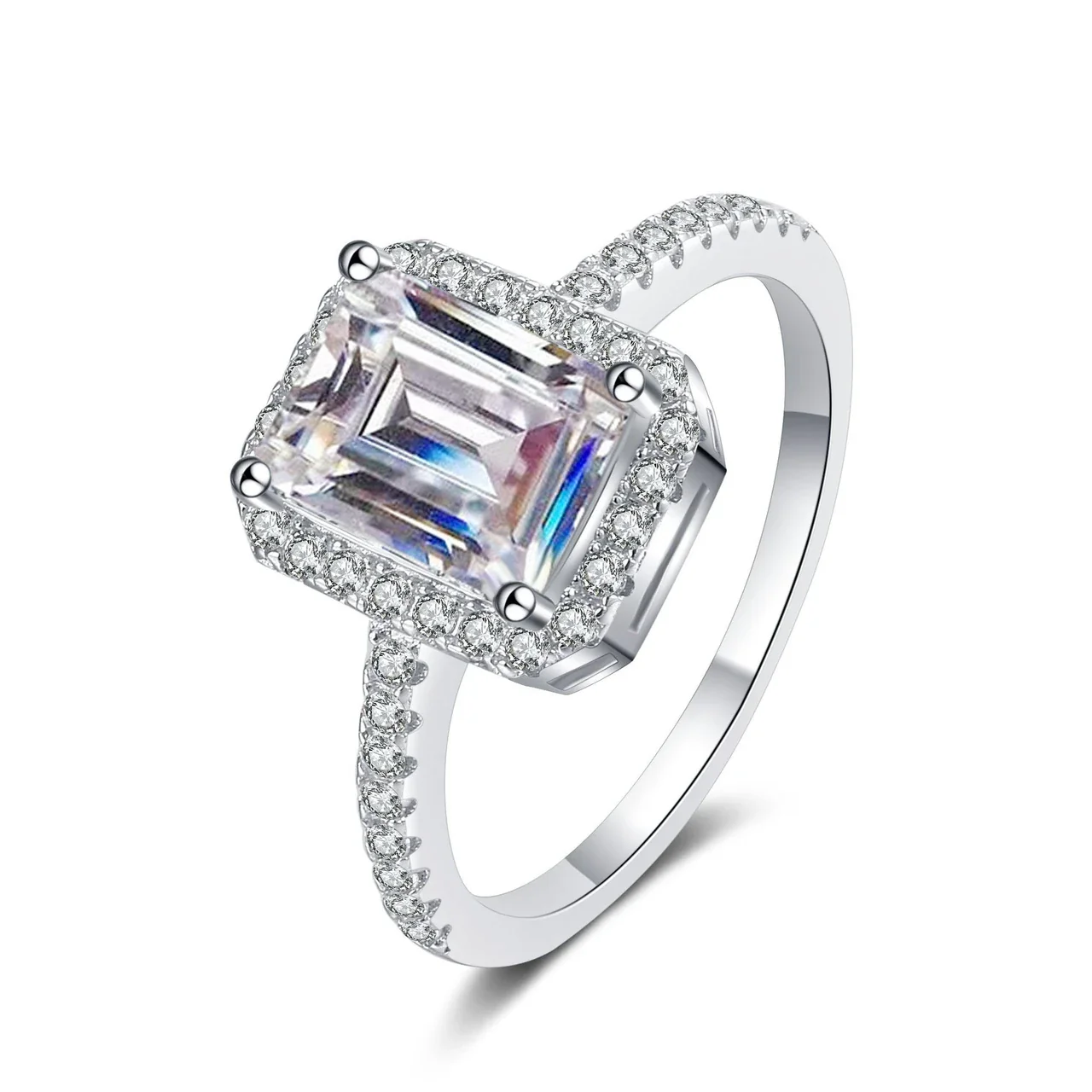
A ring listed as "size 15" from an Asian wholesale supplier is almost never a US size 15. The published US equivalency tables run to about 13¼, and sizes beyond that are special-order territory rather than catalogue stock. The number is real, but it belongs to a different scale. Any ring size guide that prints a single chart is hiding this. This page explains the three numbering systems you will meet, shows how they actually appear in a live wholesale catalogue of wholesale ring sizes, and gives the one measurement that removes the ambiguity entirely.
Three systems, three different meanings for the same number
- US and Canada use a numeric scale running from 0 to about 13¼ in the published equivalency tables, with quarter-size steps. One whole size is a difference of 0.032 inches, or 0.81 mm, of internal diameter.
- ISO 8653:2016 defines size as the inner circumference of the ring in millimetres. The standard tables run from 49 mm to 72.9 mm of circumference, which corresponds to internal diameters of roughly 15.6 mm to 23.42 mm. Continental Europe, the Nordic countries, France, Austria and Belgium use this system.
- Hong Kong, China, Japan and India use numeric scales whose whole sizes do not correlate linearly with diameter or circumference. The number is an index into a table, not a measurement.
The conversion between US and ISO is arithmetic: ISO circumference in millimetres = 2.55 × the US size + 36.5. A US 7 is therefore about 54.4 mm of circumference. The Asian scales have no equivalent formula, which is exactly why a bare number arriving from a supplier is not self-explaining.
What this looks like in a real catalogue
Across the 211 published rings on AdornTrade that carry a size option, the 686 size values group into clearly different populations:
| Value range | Occurrences | What it can be |
|---|---|---|
| 1 to 13 | 287 | Consistent with US sizing |
| 14 and above | 252 | Cannot be a US size; consistent with an Asian scale |
| "Adjustable", "Adjustable Open", "One Size" | 134 | Open band, no size system at all |
| Everything else (mixed labels such as "HK 15 Adjustable") | 13 | Interpretable only where the system is named |
The single most common value in the whole set is "Adjustable" at 111 occurrences, ahead of every numbered size. The most common number is 9 at 54, then 15 at 39, then 10 at 36. A scale that produces both a 9 and a 15 as top-three values is not one scale.
One value in the catalogue settles the question outright: a listing carrying the size "HK 15 Adjustable". Where a supplier writes the system name, the number is interpretable. Where it writes only "15", it is not.
The rule that follows for any Chinese ring size
A bare number above 13 is very unlikely to be a US ring size. A few makers do cut men’s bands to 15 or 16, but those are made to order, not a third of a stock catalogue. Values of 14 and above in a Chinese supplier's size field are an Asian scale index, and treating them as US sizes will send a customer a ring several sizes too large. The 252 occurrences above are not a rounding error; they are 36.7% of the 686 ring size values in this catalogue.
Below 14 the ambiguity is worse rather than better, because a "9" is a plausible value in more than one system and nothing in the listing distinguishes them. A number in the 1 to 13 band is not proof of US sizing — it is only proof that US sizing cannot be ruled out.
Ask for the measurement, not the size
Inner diameter in millimetres, or inner circumference in millimetres, means the same thing in every country and needs no ring size chart at all. It is also something a supplier can measure with a mandrel in seconds, so a refusal to give it is informative in itself.
Practical version of the question: "For each size you list, what is the inner diameter in mm?" A supplier that answers with a millimetre figure for each size it lists has given you something you can convert, resell and check against the ring when it arrives. A supplier that answers "size 15 is size 15" has not.
Two secondary checks to put in the same message:
- Ask whether the size range is per style or per catalogue. A supplier may stock sizes 6 to 9 on one style and 14 to 20 on another, and a single stated range can hide that.
- Ask what the tolerance is. Cast and stamped bands vary; a quoted 17.3 mm that arrives at 17.0 mm is a different ring on a customer's finger.
Why adjustable bands are so common
With 134 of the 686 size values in this catalogue being adjustable or one-size, open bands are the trade's standard answer to exactly the problem above. An open band removes the sizing conversation from the transaction: it fits a range of fingers, it cannot be ordered in the wrong size, and it cannot generate a size-based return.
The trade-off is real and should be said out loud. An adjustable band is resized by bending, which limits how heavy and how rigid the band can be, and it suits some designs far better than others. Solitaire and eternity styles are normally made in fixed sizes because the setting will not tolerate flexing. So the catalogue splits roughly along design lines rather than along price: open and wrap designs adjustable, set-stone designs numbered.
Ordering in sizes without over-committing
Sizes multiply stock. A style you carry in six sizes is six lines of inventory, not one, and a size curve that does not match your customers means dead units in the tails. For a first order the lower-risk sequence is: buy adjustable styles to test whether the design sells at all, then buy the winning design in fixed sizes once you know the demand exists.
That sequence only works if a supplier will sell you one piece. On our own listings every published style can be ordered from 1 piece, so testing a design does not require committing to a size curve first. Our own size fields are published as the supplier recorded them, mixed scales and all — you can see the numbers described above on the sterling silver rings and moissanite rings shelves and judge them yourself. We would rather show you an ambiguous "15" than silently convert it to a US size we cannot verify.
Accuracy reviewed by: Alex, Founder, AdornTrade
Sources
From the catalogue