Your shopping bag is empty.
Explore productsBuyer guides
How to Check a 925 Sterling Silver Wholesale Listing Before You Order
By Alex, Founder, AdornTrade 2026-08-31 9 min read
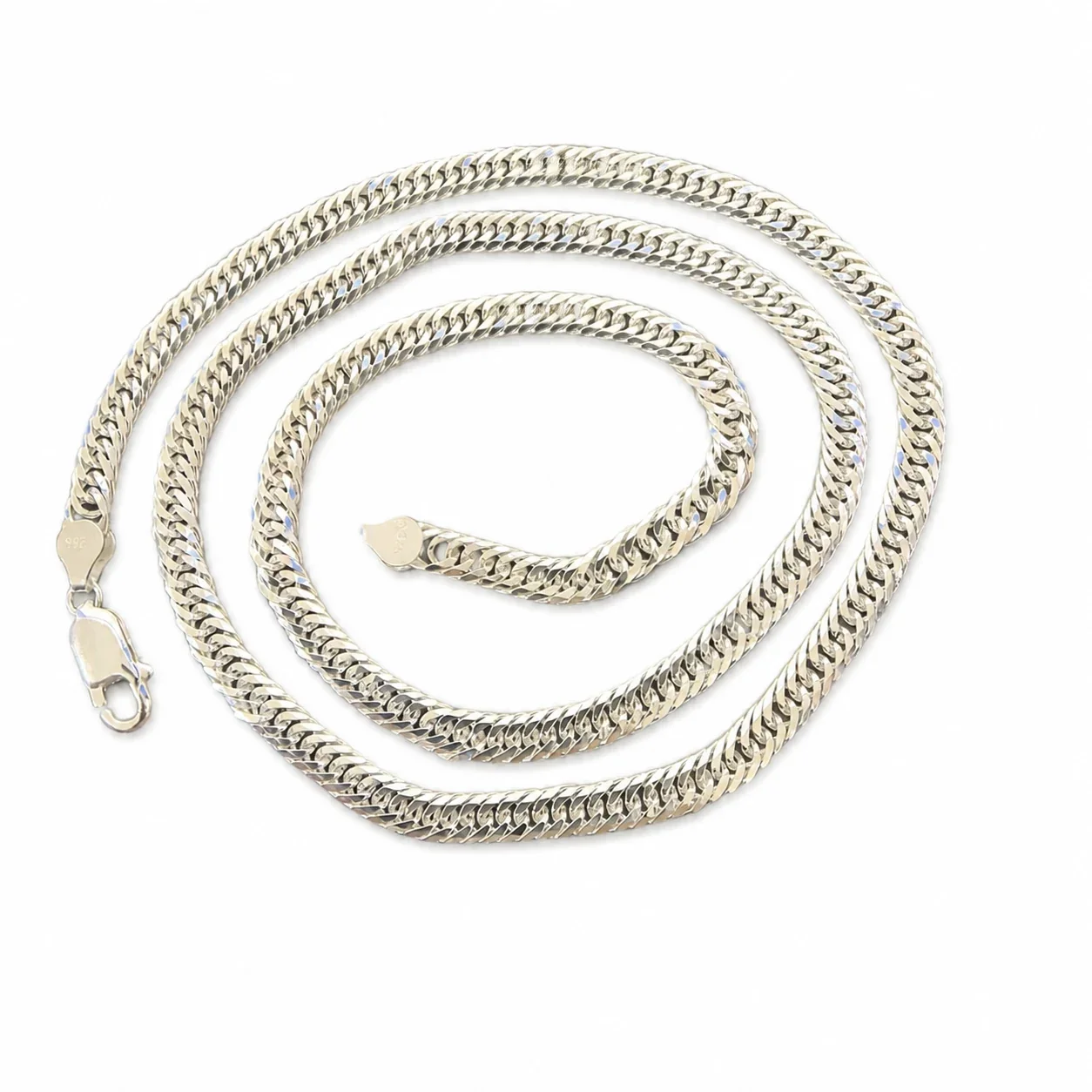
Search any sourcing platform for “925 sterling silver chain” and the results will run from about one dollar to about one hundred and fifty. Same three digits in the title, same photographs of a bright white chain, a hundred-fold spread in price. At least one end of that range is not describing solid sterling silver, and the listing text will not tell you which.
This guide is about the one check that resolves it, which takes under a minute and needs no equipment. It works because silver, unlike copper or steel, has a floor price that no supplier can go under: the metal itself is a traded commodity, and a solid piece contains a knowable quantity of it.
Why 925 has a floor and base metals do not
A copper ring is priced on labour, tooling and finish. The metal is a rounding error, so a supplier who finds a cheaper workshop can genuinely sell the same ring for less.
Sterling silver does not work that way. “925” means 92.5% silver by mass, and silver trades daily on the open market — the LBMA publishes the benchmark price, and it is the same number for everyone. A solid chain weighing thirty grams contains roughly twenty-eight grams of silver whether it was made in Guangzhou, Bangkok or Italy. Nobody buys that metal at a discount.
So the arithmetic is short. Take the gram weight, multiply by the current silver price per gram, then by 0.925, and you have the raw metal value before any labour, loss, plating, findings, packing or margin. A finished piece has to sell above that number. When a listing sits below it, the listing is wrong about something — and the thing it is usually wrong about is the word “solid.”
What solid 925 actually costs, from a live catalogue
Rather than argue from theory, here is the full silver range in our own catalogue as of 3 September 2026 — 214 published listings, priced per piece.
| Product type | Listings | Lowest | Median | Highest |
|---|---|---|---|---|
| Earrings | 35 | $3.07 | $8.51 | $27.13 |
| Rings | 45 | $3.52 | $8.24 | $25.82 |
| Bracelets | 23 | $3.86 | $9.54 | $18.07 |
| Anklets | 2 | $9.79 | $11.33 | $12.86 |
| Necklaces | 105 | $5.07 | $12.15 | $603.84 |
| Chains | 4 | $10.71 | $53.31 | $163.07 |
| All 925 silver | 214 | $3.07 | $11.19 | $603.84 |
Two numbers in that table carry the whole argument.
The cheapest 925 item in the catalogue is $3.07, and it is a pair of small earrings — the lightest thing silver is made into. Nothing sits below it. Not because we decided on a price floor, but because there is nothing to sell below it.
The median silver chain is $53.31, against a median stainless steel chain of $0.86 in the same catalogue. That is a factor of about 62 for two products that photograph almost identically. A chain is a large mass of metal with very little labour in it, so it is the product type where the metal cost dominates most completely — and therefore the product type where a suspiciously cheap “925” listing is most obviously not what it says.
If you take one thing from this page: when a wholesale listing offers a 925 sterling silver chain for two dollars, you are not looking at a better supplier. You are looking at a different product.
The three descriptions that are not solid 925
Sourcing-platform listings use a small set of phrases that read as silver to a buyer skimming quickly, and mean something else to the supplier who wrote them. In our own sourcing we reject all three rather than reinterpret them.
- Silver-plated. A base metal core with a silver coating measured in microns. The metal cost is a fraction of a percent of solid. Often written as “925 silver plated,” which puts the three digits next to a word that cancels them.
- “Silver colour” or “silver tone.” A description of appearance, not composition. Frequently applied to rhodium-finished base metal or to plain steel. Nothing in the phrase claims silver content at all, and read literally it is accurate — which is why it survives.
- “925 style” or “925 model.” In Chinese-language source listings this construction refers to a design family rather than a material. It is one of the easiest to misread through machine translation, because the translated string keeps the digits and drops the qualifier.
The practical consequence is that the material field, not the title, is where the answer lives. Titles are written to be found; material fields are written to be accurate. Where the two disagree, the material field is the one that will match what arrives.
Why our silver shelf is one of the smallest
Across the whole catalogue we publish 1,194 listings: 307 in stainless steel, 256 in moissanite, 214 in copper, 203 in natural stone and 214 in sterling silver. Silver is level with copper and well behind stainless steel, and that ordering is a result of the intake rule rather than of demand.
A listing only enters the silver family when its source record states 925 or S925 explicitly. Sources describing “silver colour,” “silver-plated” or “925 style” are rejected outright rather than relabelled upward, and a source whose material statements conflict with each other goes to manual review instead of being resolved by guesswork. That rule costs us catalogue size continuously, and it is the reason the silver shelves fill more slowly than the steel ones.
It also explains an oddity worth knowing about if you are comparing our range with a larger one: we have only four silver chains. Chains are the product type where the intake rule bites hardest, because they are exactly where the market’s cheap “925” supply is concentrated. A wider silver chain range would have been easy to assemble and would have contained things we could not stand behind.
One related fact, since it surprises people: every moissanite listing currently in the catalogue — all 255 of them today — sits on a 925 sterling silver base. The stone category and the base-metal record are kept as two separate facts on the listing, so each piece states both, and you never have to infer the metal from the stone.
A check you can run on any supplier in about a minute
- Ask the supplier for the gram weight. Most catalogues, ours included, do not print it on the listing, so this is a question rather than a lookup. A supplier who can answer per SKU is telling you they know what they are shipping; one who cannot is telling you something too.
- Get the current silver price per gram. The LBMA benchmark is published daily and is the reference the trade actually uses.
- Multiply. Weight in grams × price per gram × 0.925 gives you the silver content value. This is the raw metal, before labour, loss, findings, plating, packing or anyone’s margin.
- Compare. A finished piece priced near or below that figure is not solid 925. A piece priced at some multiple of it is normal — the multiple covers everything that is not metal, and it is larger on small intricate pieces than on heavy plain chains.
- Read the material field, not the title. Then ask the supplier which record the material statement came from. A supplier who can name the record is telling you something; one who quotes the title back is not.
The check is most decisive on chains and heavy bracelets, where metal is most of the cost. It is least decisive on small earrings and thin rings, where labour dominates and a wide range of honest prices is possible — which is also why our own silver range starts with earrings at $3.07 rather than with chains.
That difference should change how you shop the two categories. When you compare sterling silver chains at wholesale, weight is the specification that matters and price should track it almost linearly; two chains of the same gauge and length from honest suppliers will land close together, and an outlier below the pack is the signal. Buying in bulk, a sterling silver chain is therefore the easiest silver product to verify and the hardest to fake convincingly.
Comparing 925 sterling silver rings at wholesale works the other way. A ring is a small amount of metal carrying a large amount of work, so honest prices spread widely — our own run from $6.25 to $23.50 — and the metal floor sits far enough below every one of them that it rules almost nothing out. On rings, the material field and the supplier’s answer about their source record do the work that arithmetic does on chains.
What quantity pricing does and does not change
Across all 3,479 published variants in the catalogue, the 3-piece unit price is 93.75% of the single-piece price and the 8-piece price is 81.25% of it. Applied to silver:
| Silver product | 1 piece | 3 pieces | 8 pieces |
|---|---|---|---|
| Median earrings | $8.51 | $7.98 | $6.91 |
| Median ring | $8.24 | $7.73 | $6.70 |
| Median bracelet | $9.54 | $8.94 | $7.75 |
| Median necklace | $12.15 | $11.39 | $9.87 |
| Median chain | $53.31 | $49.98 | $43.31 |
Note what quantity pricing cannot do. An 18.75% reduction at eight pieces does not move a solid silver chain anywhere near a two-dollar listing, because the discount applies to the margin and labour, not to the metal. Quantity breaks compress the part of the price that is work. They cannot compress the part that is silver. Any supplier whose bulk price crosses the metal floor is telling you the piece was never solid to begin with.
This is also why silver is the wrong material to lead a first order with if your customers are price-led. At the 8-piece step a median silver ring is $6.70 against $2.96 for a steel one and $0.94 for a copper one. Silver earns its price with buyers who already want silver; it does not compete on being cheap, and a supplier who tells you it can is describing plated goods.
Where to look
The shelves referenced here: 925 sterling silver, silver necklaces, silver rings, moissanite on silver, and for the price contrast, stainless steel. The order quantity page sets out the quantity steps.
The short version
Silver is the one material in a wholesale catalogue where you can check the supplier’s honesty with arithmetic instead of trust. Weight times the day’s metal price gives you a number no listing can go under. Everything cheaper than that number is plated, hollow, lighter than stated, or mislabelled — and the material field, not the title, will usually say which.
Buying 925 sterling silver wholesale is therefore easier to get right than buying almost anything else, provided you do the multiplication before you compare prices rather than after the parcel arrives.
Accuracy reviewed by: Alex, Founder, AdornTrade
Sources
From the catalogue