Your shopping bag is empty.
Explore productsBuyer guides
Stainless Steel Jewelry Wholesale: Real Prices and What to Check
By Alex, Founder, AdornTrade 2026-08-31 7 min read
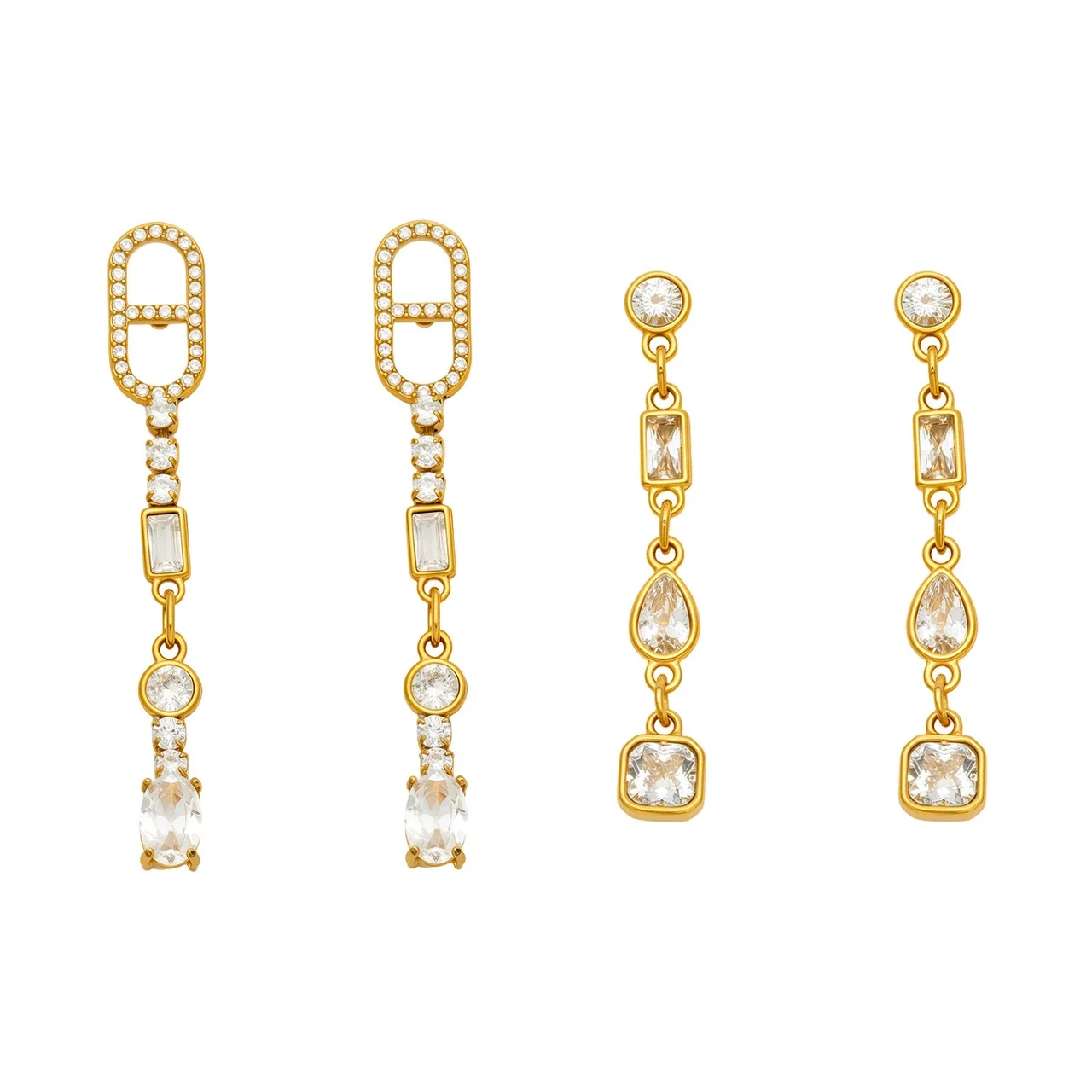
Stainless steel is the entry material for most new jewelry resellers, and it is also the material where supplier listings are least informative. Almost every steel listing on the large sourcing platforms carries the same short list of claims, in the same order, regardless of who made the piece. That uniformity is the problem: when every listing says the same thing, the claims stop carrying information.
This guide covers what a stainless steel jewelry wholesale catalogue can and cannot tell you, with the real price bands from ours — 264 published steel listings as of 1 September 2026 — and the checks that separate a supplier who knows their goods from one who is reselling a spreadsheet.
What stainless steel jewelry costs at wholesale
Steel sits in the middle of the price range for finished jewelry: above copper, below silver. Here is the full spread of our steel catalogue by product type.
| Product type | Listings | Lowest | Median | Highest |
|---|---|---|---|---|
| Chains | 8 | $0.14 | $0.86 | $2.86 |
| Rings | 12 | $2.74 | $3.52 | $5.38 |
| Earrings | 76 | $0.86 | $3.93 | $7.74 |
| Bracelets | 45 | $1.43 | $5.07 | $14.24 |
| Sets | 25 | $2.12 | $5.12 | $11.31 |
| Bangles | 39 | $1.55 | $5.59 | $11.31 |
| Necklaces | 59 | $0.19 | $5.62 | $31.43 |
| All steel | 264 | $0.14 | $4.24 | $31.43 |
Both ends of that table need reading carefully, and neither means what a quick glance suggests.
The low end is a size, not a product. Our cheapest steel listing is $0.14, and it is a finished Cuban link chain necklace — in its narrowest, shortest variant, 3 mm wide by 45 cm. The same listing runs to $1.17 at 12 mm by 70 cm. One product, an 8.4-fold spread, entirely from width and length.
This matters when you compare suppliers, because a headline price is almost always the smallest variant. “Steel necklaces from $0.14” and “steel necklaces from $1.17” can describe the identical product. Always compare at a stated width and length, or you are comparing a 3 mm chain against a 12 mm one and concluding something about the supplier.
The high end is stone-setting, not metal. The $31.43 necklace is a prong-set round CZ tennis necklace and the $14.24 bracelet is a CZ flower-station piece. Both are dense with hand-set stones. Steel itself is cheap and stays cheap; what moves a steel piece from four dollars to thirty is the labour of setting stones into it, not the weight of the metal. This is the opposite of silver, where metal content sets a floor that labour then builds on.
The practical version: when comparing wholesale stainless steel chains, match the width and length before you compare anything. When comparing stainless steel rings at wholesale, look at whether stones are set and how many, because that is where the price is.
Why we publish no alloy grade for steel, and what that means for you
This is the part where our catalogue deliberately says less than our competitors’ catalogues, so it is worth explaining rather than hiding.
Steel jewelry listings on sourcing platforms very often carry an alloy grade designation in the title. We checked ours against the source records and stopped publishing those designations entirely in August 2026. The reason is simple: the designations came from title text that repeats verbatim across unrelated suppliers and unrelated products. It is template copy, not a per-item material record, and a supplier repeating a template is not evidence about the metal in a specific piece.
So every steel item in this catalogue carries one material label — stainless steel — and nothing more specific. Where a source record named a low-corrosion-resistance alloy that we will not stock at all, the item is rejected outright rather than relabelled.
What this means when you are comparing suppliers: a grade designation in a listing title is not, by itself, information. It becomes information when the supplier can say where it came from for that specific item. The useful question is not “is this graded steel” but “what record are you reading that from.” A supplier who can answer is telling you something. A supplier who repeats the title back to you is not.
What a steel catalogue can honestly tell you
Setting aside claims that cannot be supported, several things in a listing are genuinely checkable and worth weighting:
- Whether the headline price names a size. A range that starts at fourteen cents is quoting its narrowest variant, as the chain example above shows. A catalogue that makes you dig for the width is not comparing honestly.
- Whether plating is described as plating. A gold-coloured steel piece is plated steel. A catalogue that calls it plating throughout is being straight with you; one that blurs the wording is not.
- Whether quantity pricing is on the listing itself. Site-wide quantity claims are marketing. Per-listing quantity prices are a commitment attached to the item you are actually buying.
- Whether the range has depth in the type you sell. Our 76 steel earrings and 59 steel necklaces are shelves you can reorder from. Our 12 steel rings and 8 steel chains are not yet, and saying so is more useful to you than implying otherwise.
- Whether the supplier rejects anything. A catalogue that accepts every source it sees has no material policy, and a supplier with no material policy cannot enforce one on your behalf.
Quantity steps, and where the saving actually is
Across all 3,479 published variants in this catalogue, quantity pricing is uniform and published rather than negotiated: the 3-piece unit price is 93.75% of the single-piece price, and the 8-piece unit price is 81.25% of it. Across individual listings the 8-piece figure ranges from 78.95% to 85.71%.
| Steel product | 1 piece | 3 pieces | 8 pieces |
|---|---|---|---|
| Median chain | $0.86 | $0.81 | $0.70 |
| Median ring | $3.52 | $3.30 | $2.86 |
| Median earrings | $3.93 | $3.68 | $3.19 |
| Median necklace | $5.62 | $5.27 | $4.57 |
| Median bangle | $5.59 | $5.24 | $4.54 |
The step from 1 to 3 saves 6.25%, which on a $3.93 pair of earrings is 25 cents. It is not worth reorganising an order around. The step from 3 to 8 is worth 18.75% against the single price, and that is the one that changes your unit economics. For a shelf you have already tested, order in eights.
A worked first order in steel
Steel is the cheapest way to put a broad, finished assortment in front of customers. At the 8-piece step:
| Line | Unit at 8+ | Qty | Line total |
|---|---|---|---|
| Median steel earrings | $3.19 | 8 | $25.52 |
| Median steel necklace | $4.57 | 8 | $36.56 |
| Median steel bangle | $4.54 | 8 | $36.32 |
| Median steel bracelet | $4.12 | 8 | $32.96 |
| Total | 32 | $131.36 |
Thirty-two finished pieces across four product types for $131.36 in goods. Shipping is quoted separately at checkout against the destination and is not included above. That is a small enough commitment that a result either way is informative rather than painful.
Where steel fits against the other materials
If you are choosing which material to lead with, the median finished piece tells the story quickly: copper around $1.25, stainless steel around $4.24, 925 sterling silver around $11.53, moissanite around $19.24. Steel is roughly three times copper and roughly a third of silver.
That middle position is why it works as a first shelf. Copper lets you test the widest assortment for the least money but sits at a price point some customers read as disposable. Silver carries a metal-content floor that no supplier can price under. Steel gives you a finished, substantial-feeling piece at a cost where an unsold unit does not hurt.
You can browse the shelves referenced here: stainless steel, steel earrings, steel necklaces, copper and brass, and 925 sterling silver. The order quantity page sets out the quantity steps in full.
The short version
Buying wholesale stainless steel jewelry well comes down to three habits. Compare at a stated width and length, because a headline price is the smallest variant. Treat an alloy designation as a question to ask rather than an answer you have received. Take the 8-piece step on shelves you have tested and ignore the 3-piece step, because 6.25% is not worth planning around while 18.75% is.
None of that requires trusting us. All of it can be checked against any supplier’s own catalogue, including this one.
Accuracy reviewed by: Alex, Founder, AdornTrade
Sources
From the catalogue