Your shopping bag is empty.
Explore productsBuyer guides
How to Clean Sterling Silver Jewelry (and Keep It From Tarnishing)
By Alex Hou, Founder, AdornTrade 2026-10-03 13 min read
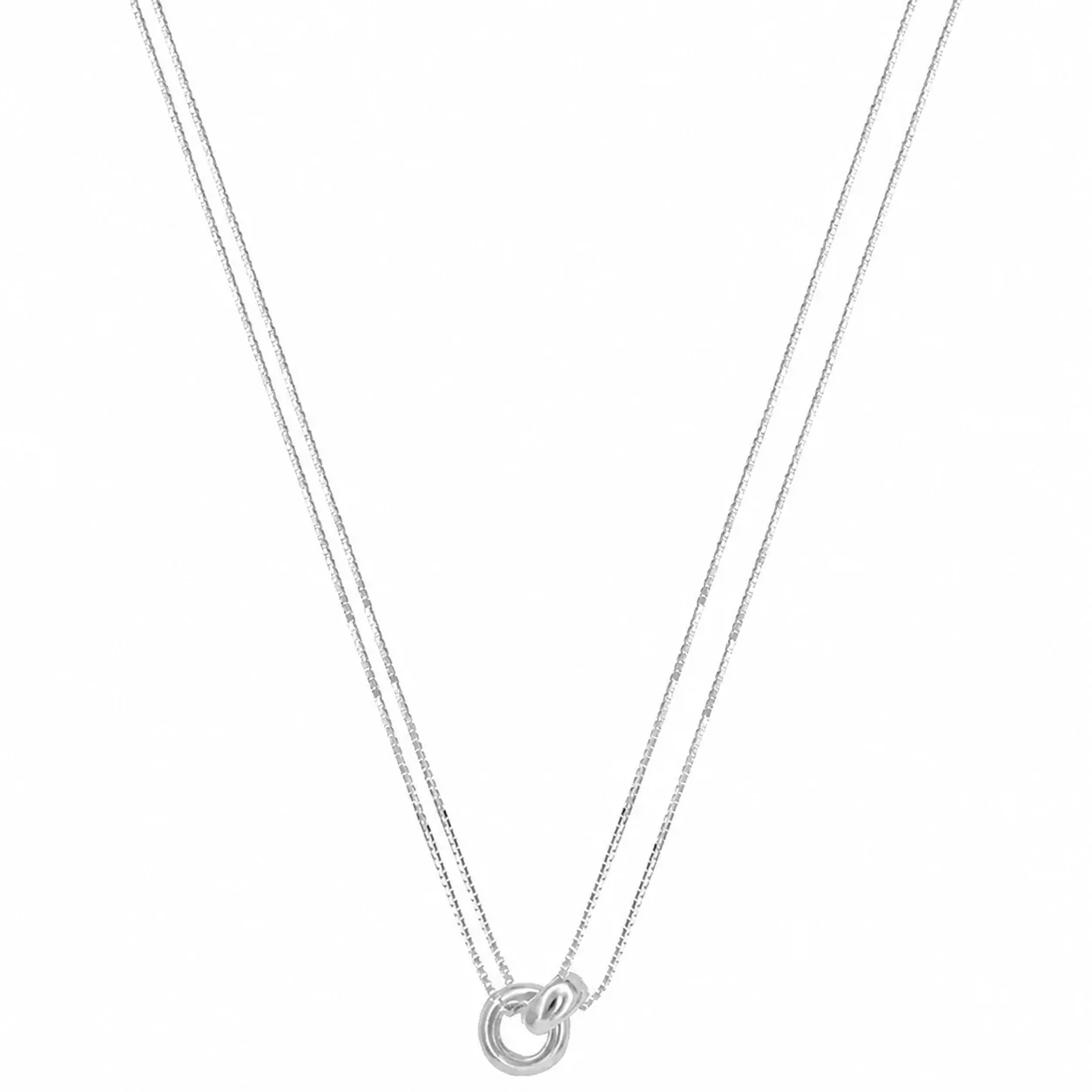
To clean sterling silver jewelry, start with the gentlest step and stop as soon as the piece looks right: wash it in warm water with a little mild soap, wipe it dry with a soft cloth, and only if it is still dark, polish it with a cloth or cleaner made for silver. For heavy black tarnish, a paste of precipitated calcium carbonate (precipitated chalk) or the aluminium-and-soda bath both work, but every polish removes a little silver, and neither should be used on plated pieces, pearls or deliberately blackened design details. To slow tarnish down, store each piece in a sealed polyethylene bag away from rubber, wool and felt.
The rest of this page explains how to clean sterling silver jewelry in more detail: why silver goes dark, how to clean tarnished silver step by step, which home remedies are safe and when they are not, how to clean moissanite and pearls set in silver, and how to store sterling silver. Third-party facts come from the Canadian Conservation Institute (CCI), the US National Park Service (NPS), the Gemological Institute of America (GIA), the US Federal Trade Commission and a university chemistry text, listed under Sources.
Why sterling silver turns dark
Sterling silver is an alloy of 92.5% silver and 7.5% other metals, usually copper. Fine silver (99.9%) is too soft for most jewelry, so copper is added for hardness and strength. In the US, the FTC Jewelry Guides (16 CFR § 23.5) allow the words "Sterling", "Sterling Silver" or "Ster." only on metal that is at least 925/1,000 pure silver. For what the 925, S925 and "925 Italy" stamps mean, see What does 925 Italy mean on jewelry?
The dark film is not dirt. According to the Canadian Conservation Institute (CCI), tarnish "consists mainly of black silver sulphide" (Ag2S) and is caused by sulphur-containing compounds such as hydrogen sulphide in the air. Before it turns black, a thin tarnish layer can pass through yellow, red and blue. The NPS Museum Handbook describes the same sequence on silver as a slight gray dullness, then blue or purple, deepening to brown or black as the layer thickens.
Very small amounts of gas are enough. CCI's guidelines for metal objects state that silver exposed to only 0.1 µg/m³ (1 ppb) of hydrogen sulphide will typically tarnish within a year. Common sources named by the two conservation bodies:
- Air pollution: sulphur from the burning of fossil fuels (NPS); polluted urban air and coastal environments are among the more severe settings.
- Household materials: foam rubber, carpet padding, paints, wool and felt (NPS); rubber gasketing and any rubber products emit sulphur-based gases (CCI).
- Your skin: salt from fingerprints reacts with silver to form silver chloride, which is light-sensitive and can darken over time (CCI). The NPS adds that salts and oils from skin can etch metals.
- Humidity and dust: the NPS lists high humidity, sulphur compounds, fingerprints and organic vapours as the causes of silver corrosion, and notes that dust can trap moisture against the metal.
So tarnish is a normal chemical reaction of sterling silver with its surroundings, not a sign that a piece is fake.
How to clean tarnished silver, step by step
Conservators work from the mildest method upward because, in the words of the NPS, "cleaning and polishing remove original metal". CCI makes the same point: each polishing or chemical tarnish removal takes away a certain amount of the underlying silver along with the tarnish. Use the first step that works.
- Wash. Wash in warm water with a little mild soap and a soft brush, then rinse and dry fully with a soft cloth. GIA's cleaning guide recommends "a gentle touch" with a toothbrush and warm soapy water. CCI's version for museum silver uses a non-ionic or anionic detergent in distilled water. Washing removes skin oil, lotion and grime, which often makes a piece look darker than its tarnish does.
- Wipe light tarnish. For a faint yellow or gray film, a polishing cloth made for silver is GIA's suggestion for home use. For museum objects the NPS removes light tarnish by wiping with cotton moistened with denatured alcohol and testing a small area first to see whether polishing is needed at all.
- Polish heavier tarnish. CCI's home-made polish is a small amount of precipitated calcium carbonate (precipitated chalk) mixed with water into a thick paste. The NPS mixes it with denatured alcohol to about the consistency of cream. Both say not to substitute ground chalk or whiting: the NPS says they are abrasive and will scratch, CCI that their particles are larger. Rub gently in small circles with soft flannel or loose cotton, change the cloth often so you are not grinding removed tarnish back into the surface, and use very little powder; the NPS calls using too much "a common mistake".
- Rinse and dry. Remove every trace of polish (CCI uses distilled water with a detergent, the NPS clean denatured alcohol), then dry completely.
- Leave the recesses alone. The NPS points out that complete removal of tarnish is often undesirable: "Darker tarnish in the recesses often helps the design elements stand out." The NPS also notes that patinas in brown, gray or black were often created on purpose as part of the finish. Polish the high points and leave the grooves dark.
Cleaning methods compared
| Method | What it removes | When not to use it | Source |
|---|---|---|---|
| Warm water, mild soap, soft brush | Skin oil, lotion, dust, grime | Strung pearls: let the string dry completely before wearing | GIA 4Cs cleaning guide; GIA pearl care |
| Silver polishing cloth | Light tarnish, fingerprints | Cloths with abrasive in them; the NPS prefers cloths that rely on the stiffness of the weave | GIA 4Cs; NPS Museum Handbook Appendix O |
| Precipitated calcium carbonate paste | Moderate to heavy tarnish, plus a thin layer of silver | Plated pieces; deliberately darkened recesses; do not swap in ground chalk or whiting | CCI Notes 9/7; NPS Conserve O Gram 10/2 |
| Aluminium + baking soda or washing soda bath | Tarnish, converted back to silver rather than rubbed off | Hollow or sealed pieces; pearls and other heat-sensitive gems; oxidized designs; plated pieces | UC Davis LibreTexts; CCI Notes 9/7 |
| Commercial chemical dip | Tarnish, including in recesses | Niello and organic materials; sealed hollow parts; full immersion (CCI applies dips locally with a swab) | CCI Notes 9/7 |
| Toothpaste, chlorine, bleach | Not recommended | Always: GIA says abrasives "can erode the metal" and chlorine and bleaching agents "can damage some gemstones and metal alloys" | GIA 4Cs |
Home remedies: what is safe and what is not
Baking soda and aluminium foil
This method works by chemistry, not by scrubbing. When silver touches aluminium in a hot soda solution, the two metals form a small electrochemical cell, and the silver sulphide is reduced back to metallic silver. The UC Davis chemistry demonstration on LibreTexts describes the result as converting "the silver sulfide back to silver, without removing any silver", which is the one real advantage over polishing. The sources differ on the recipe: the UC Davis demonstration uses boiling water with baking soda (sodium bicarbonate) and salt; CCI describes a warm solution of washing soda (sodium carbonate); none of the sources we checked gives fixed quantities, so we do not give one either.
Cautions, all from the same sources:
- Hot water scalds; the UC Davis page lists this as the main hazard.
- CCI says objects with sealed hollow components should not be put in water-based solutions, and that objects cleaned this way "may tarnish more quickly than silver that has been polished".
- Pearls: GIA warns that high heat can burn cultured pearls or cause discoloration, splitting or cracking. Keep pearl pieces out of the bath.
- Plated pieces: CCI's general warning is that if an object is silver plated, "any method of tarnish removal may be very damaging".
- Oxidized designs: an immersion method reaches into every groove. CCI notes that chemically dipped pieces often look "new" because no tarnish is left in the deeper recesses; the same applies to any bath that treats the whole piece, so blackened detail will lighten.
Toothpaste
Toothpaste cleans by abrasion. GIA's advice is direct: do not use abrasives "like those found in some metal polishes or toothpaste, as they can erode the metal and scratch some gems."
Commercial polishes and dips
For everyday jewelry, GIA suggests a cleaner made specifically for silver, or a silver polishing cloth for pieces with delicate or porous stones or plating. The NPS avoids commercial polishes on valuable objects because many contain ammonia or harsh abrasives. CCI notes that dips dissolve tarnish faster than the silver underneath, can leave a yellow discoloration, and are best applied locally with a cotton swab, then rinsed.
Cleaning moissanite and pearls set in sterling silver
Moissanite in a 925 setting
Moissanite is far tougher than the metal around it. GIA gives it a hardness of 9.25 on the Mohs scale and notes that it is doubly refractive, so you see a doubled image of the back facets. In practice the setting needs more care than the stone. GIA notes that dust and oils build up on jewelry over time; behind a stone that film is best lifted with a soft toothbrush and warm soapy water. Clean the silver claws and band the same way you clean any sterling piece, and keep polishing paste out of the gap under the stone, where it is hard to rinse out. For how moissanite compares with diamond and cubic zirconia, see Moissanite vs diamond vs cubic zirconia.
Pearls set in silver
Pearls need the opposite approach. GIA ranks pearl at 2.5 on the Mohs scale, "very soft and easily scratched or abraded", and lists hair spray, perfume, cosmetics, perspiration and all acids as things that damage it. GIA's rules: never use an ultrasonic or steam cleaner, wipe with a very soft, clean cloth after each wearing, and use warm, soapy water only for occasional thorough cleaning. For a silver pendant or ring with a pearl, polish the metal with a silver cloth and keep it off the pearl; never put the piece in a dip or a hot soda bath.
Sterling silver care: daily habits
- Wipe after wearing. GIA: a soft cloth is always safe for removing dust and oils, whatever the metal or stone.
- Take it off for pools and cleaning. GIA advises avoiding chlorine and other bleaching agents, which can damage some gemstones and metal alloys.
- Put it on after cosmetics. This matters most for pearls, which GIA says are damaged by hair spray, perfume and cosmetics.
- Check the stones. When brushing a ring, look at the claws; GIA advises a gentle touch so stones are not loosened.
How to store sterling silver
Good storage cuts off the sulphur gases that cause tarnish. What the conservation bodies recommend:
- Seal each piece. CCI places individual silver objects inside polyethylene bags and seals them, wrapping them first in acid-free tissue to prevent scratches.
- Add an absorber. CCI adds desiccated silica gel and activated charcoal inside the bag, or a tarnish-preventing fabric such as Pacific Silvercloth that removes sulphur-containing gases.
- Keep it away from rubber, wool and felt. These release sulphur compounds (NPS, CCI). A rubber band around a jewelry bag, or a box lined with wool felt, works against you.
- Keep the air dry. CCI recommends low relative humidity for silver. Neither source gives a single silver-specific figure: CCI says most metals show no immediate problems at a moderate 40–55% RH, and the NPS recommends no more than 35% RH for metals in salt-air environments and room temperatures of 60° to 75°F for most metals.
- Avoid oak. The NPS warns that hardwoods such as oak can emit acidic vapours that corrode silver; this is relevant for wooden display cases and drawers.
For retailers: keeping silver stock looking new
A few habits from museum practice translate directly to a shop:
- Store stock sealed. Keep back stock in individual sealed polyethylene bags with an absorber, as CCI describes, and only open what goes on display.
- Handle with gloves. CCI recommends clean nitrile gloves for handling metal objects, because fingerprint salt forms silver chloride. The NPS warns against gloves processed with chlorine, which have been found to tarnish silver after only a short period of contact, and against synthetic rubber gloves, some brands of which contain high proportions of sulphur and chlorides.
- Wipe, do not polish, after try-ons. The NPS uses a jeweler's cloth with no abrasive to buff away fingerprints from uncoated silver.
- Check the display case. CCI uses desiccated silica gel inside cases to keep the humidity low; avoid felt, wool, rubber and oak (NPS).
- Brief the customer in one sentence. "This is 925 sterling silver: it darkens over time, which is normal; wipe it with a silver cloth, keep it in a sealed bag, and take it off before swimming or cleaning." For pearl pieces add: "No ultrasonic, no steam, and put it on after perfume."
On AdornTrade there are currently 1,042 listings on a 925 sterling silver base: 627 in the sterling silver family and 415 moissanite pieces, currently all set on 925 silver and each shipped with a GRA certificate. In October 2026, 101 listings in the silver family offer a gold-colour option and 15 a rose-colour option as listed by suppliers, and 23 listings feature pearl. Before polishing any gold- or rose-coloured silver piece, find out what the colour layer is: a polish or dip that removes tarnish can also remove a thin surface layer. Our guide to gold plated vs gold filled vs vermeil explains the difference between those finishes. Browse the sterling silver category, the moissanite category, or the overview of wholesale sterling silver jewelry.
Questions people ask
Does real sterling silver tarnish?
Yes. Sterling silver is 92.5% silver, and silver reacts with sulphur compounds in the air to form black silver sulphide. CCI notes that 1 ppb of hydrogen sulphide is typically enough to tarnish silver within a year. Darkening on its own is not evidence that a piece is fake.
What is the fastest way to clean tarnished silver at home?
For light tarnish, a silver polishing cloth. For heavy tarnish, the aluminium-and-soda bath is quick and converts the tarnish back to silver instead of rubbing it off, but keep pearls, plated pieces, hollow pieces and oxidized designs out of it.
Can I use toothpaste or baking soda paste to clean silver?
Toothpaste is not recommended: GIA says abrasives like those in toothpaste can erode the metal and scratch some gems. Conservators use precipitated calcium carbonate precisely because coarser powders such as ground chalk and whiting scratch.
Can I wear sterling silver in the shower or pool?
Take it off for the pool and for cleaning with bleach: GIA advises avoiding chlorine and other bleaching agents. High humidity is one of the causes of silver corrosion listed by the NPS, so dry a piece fully after it gets wet.
How do I clean a moissanite ring set in sterling silver?
Warm soapy water and a soft toothbrush behind the stone, then a silver cloth on the metal. Moissanite rates 9.25 on the Mohs scale (GIA), so the silver, not the stone, is what needs the gentle treatment.
Accuracy reviewed by: Alex Hou, Founder, AdornTrade
Sources
- Canadian Conservation Institute — CCI Notes 9/7: Silver – Care and Tarnish Removal (silver sulphide, precipitated calcium carbonate polish, dips, aluminium + washing soda method, polyethylene bag storage)
- Canadian Conservation Institute — Caring for metal objects (0.1 µg/m³ / 1 ppb hydrogen sulphide, rubber emissions, silver chloride from fingerprints, nitrile gloves, 40–55% RH, Pacific Silvercloth)
- US National Park Service — Conserve O Gram 10/2: Caring for Silver and Copper Alloy Objects (1999)
- US National Park Service — Museum Handbook Part I, Appendix O: Curatorial Care of Metal Objects (2002)
- GIA 4Cs — Holiday Buying Guide: How to Clean Jewelry (toothpaste/abrasives, chlorine and bleach, silver cleaner or polishing cloth)
- GIA — Pearl Care and Cleaning Guide (Mohs 2.5, no ultrasonic or steam, heat and chemical damage)
- GIA — An Introduction to Imitation Diamonds & Other Gems (synthetic moissanite hardness 9.25 Mohs, doubly refractive)
- 16 CFR § 23.5 — FTC Jewelry Guides: Misrepresentation as to silver content (Sterling only if at least 925/1,000 pure silver)
- UC Davis Chemistry Demos (LibreTexts) — Cleaning Silverware: Electrochemical Reaction
- Wikipedia — Sterling silver (92.5% silver, 7.5% other metals, usually copper; fine silver 99.9% is soft)
From the catalogue