Your shopping bag is empty.
Explore productsBuyer guides
Gold-Plated vs Gold-Filled vs Vermeil: Which Words Are Defined
By Alex, Founder, AdornTrade 2026-09-11 5 min read
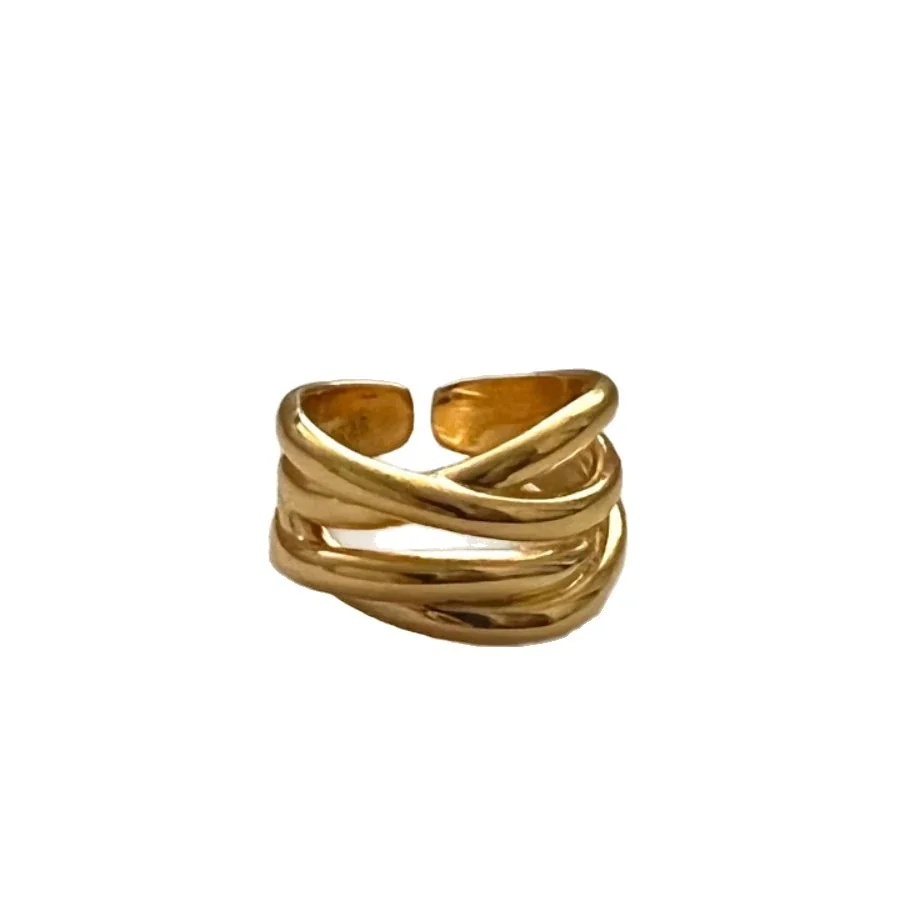
Gold-plated, gold-filled and vermeil describe three different constructions, and in the United States two of the three have legal definitions while one does not. That asymmetry is the whole story: a supplier can call almost anything gold-plated, but cannot call it vermeil or gold-filled without meeting a written standard. This page sets out the definitions, then shows what the words actually attach to in a live wholesale catalogue of 326 gold-plated pieces.
Gold plated vs gold filled vs vermeil: the three constructions
| Gold-plated | Gold-filled | Vermeil | |
|---|---|---|---|
| How the gold is applied | Electroplating or similar deposition | A gold alloy layer mechanically heat-bonded to a core | Gold applied over silver |
| Required base metal | None specified | Base metal core, typically brass, sometimes copper or silver | Sterling silver |
| Minimum gold | No legally mandated minimum thickness | At least 5% gold by weight | At least 10-karat fineness, at least 2½ microns thick |
| Marking required by the cited rules | None | Commonly 1/20 12kt GF, 1/20 14kt GF or 1/10 10kt | None specified; the gold content is defined by karat and thickness, not by a stamp |
Read as a pair, gold filled vs vermeil is a choice between a thickness standard and a base-metal standard. The numbers behind those rows, stated plainly: US vermeil is defined at 16 CFR § 23.4: a sterling silver base, gold of not less than 10-karat fineness, and a coating of at least 2½ microns — about 100 millionths of an inch — of fine gold on all significant surfaces, with reasonable durability. Gold-filled under FTC rules must contain a minimum of 5% gold by weight, and the published comparison puts its gold layer at 5 to 10 times the thickness of regular gold plating and 15 to 25 times the thickness of an electroplated finish. Gold-filled items are commonly described as lasting 10 to 30 years before the gold layer wears through.
Those last figures describe the gold-filled category as a whole, from the source cited below. They are not a statement about any product we sell, and nothing on this page should be read as a wear or durability promise for a specific item.
Why gold plated jewelry carries the least information
What is vermeil, in short, is a specification; gold-plated is not. Gold-plated has no minimum thickness in the US rules. A deposit measured in fractions of a micron and a deposit ten times heavier can both be described with the same two words, entirely lawfully. The term tells you what the surface is made of and nothing about how much of it there is.
This is why the useful supplier question is not "is it gold-plated" but "what is underneath it, and how thick is the gold". The first has one answer for every listing in the category. The second separates them.
What the word attaches to in a real catalogue
Of the 1,161 products currently published on AdornTrade, 326 carry a gold-plated description. Their base materials break down like this:
| Base material of the piece | Gold-plated products |
|---|---|
| Stainless steel | 143 |
| Freshwater pearl | 74 |
| Copper | 69 |
| Pearl | 32 |
| 925 sterling silver | 5 |
| Crystal, agate, turquoise | 3 |
Across the 968 variants those products carry, single-piece prices run from $0.19 to $47.48 with a median of $4.51. A spread of roughly 250 times inside one description is the clearest possible demonstration that "gold-plated" is not a specification.
What we do not claim, and why
Five of those 326 pieces sit on a 925 sterling silver base, which is the base metal the vermeil definition requires. We still do not describe them as vermeil, because the definition has two more conditions — at least 10-karat fineness and at least 2½ microns of gold — and we do not hold measured karat or micron figures for those items. A base metal that qualifies is one of three requirements, not the standard.
The same reasoning rules out gold-filled entirely: we publish no gold-filled products, because gold-filled is a specific bonded construction with a 5% by weight minimum, and describing electroplated stock that way would be false regardless of how the plating performs.
No listing of ours carries a plating thickness figure, because we do not hold measured thickness for plated stock. A supplier record showing that a piece was electroplated establishes the process, not the depth.
What to ask a supplier
- What is the base metal? Brass, copper, steel and silver behave differently and cost differently. "Gold-plated" answers none of that.
- What is the plating thickness in microns? A supplier quoting 0.5 microns and one quoting 2.5 microns are selling different products at the same description.
- What karat is the gold? Relevant for colour as well as for whether a vermeil claim could even be made.
- If it is described as vermeil, is the base 925 and the gold at least 10 karat and 2½ microns? All three conditions, or the word does not apply in the US market.
- If it is described as gold-filled, what is the marking? Stamps of the 1/20 14kt GF form state the ratio directly. A gold-filled claim with no stamp and no stated ratio leaves you nothing to check.
Choosing between them for resale
Gold-plated is where volume price points live, and our own median of $4.51 across 968 variants shows why: it allows a fashion item to reach a shelf at a price a customer will pay on impulse. Gold-filled and vermeil cost materially more because they are defined by how much gold is present, and they suit lines sold on longevity rather than on turnover.
The mistake to avoid is buying one and describing it as another. Vermeil and gold-filled are defined in US trade regulation, so a wrong label is not a matter of taste. Most of our own plated stock is on steel and on copper — the stainless steel and copper and brass shelves carry 143 and 69 of the 326 respectively — and none of it is sold as anything but plated.
Accuracy reviewed by: Alex, Founder, AdornTrade
Sources
- Wikipedia — Vermeil (16 CFR 23.4: sterling silver base, not less than 10-karat fineness, at least 2.5 microns of fine gold on all significant surfaces)
- Wikipedia — Gold-filled jewelry (FTC minimum 5% gold by weight; 1/20 12kt GF and 1/20 14kt GF markings; layer 5-10x regular plating and 15-25x electroplate; commonly 10-30 years)
- US Code of Federal Regulations — 16 CFR Part 23, Guides for the Jewelry, Precious Metals, and Pewter Industries
From the catalogue