Your shopping bag is empty.
Explore productsBuyer guides
Does Sterling Silver Tarnish or Turn Your Skin Green?
By Alex Hou, Founder, AdornTrade 2026-10-03 15 min read
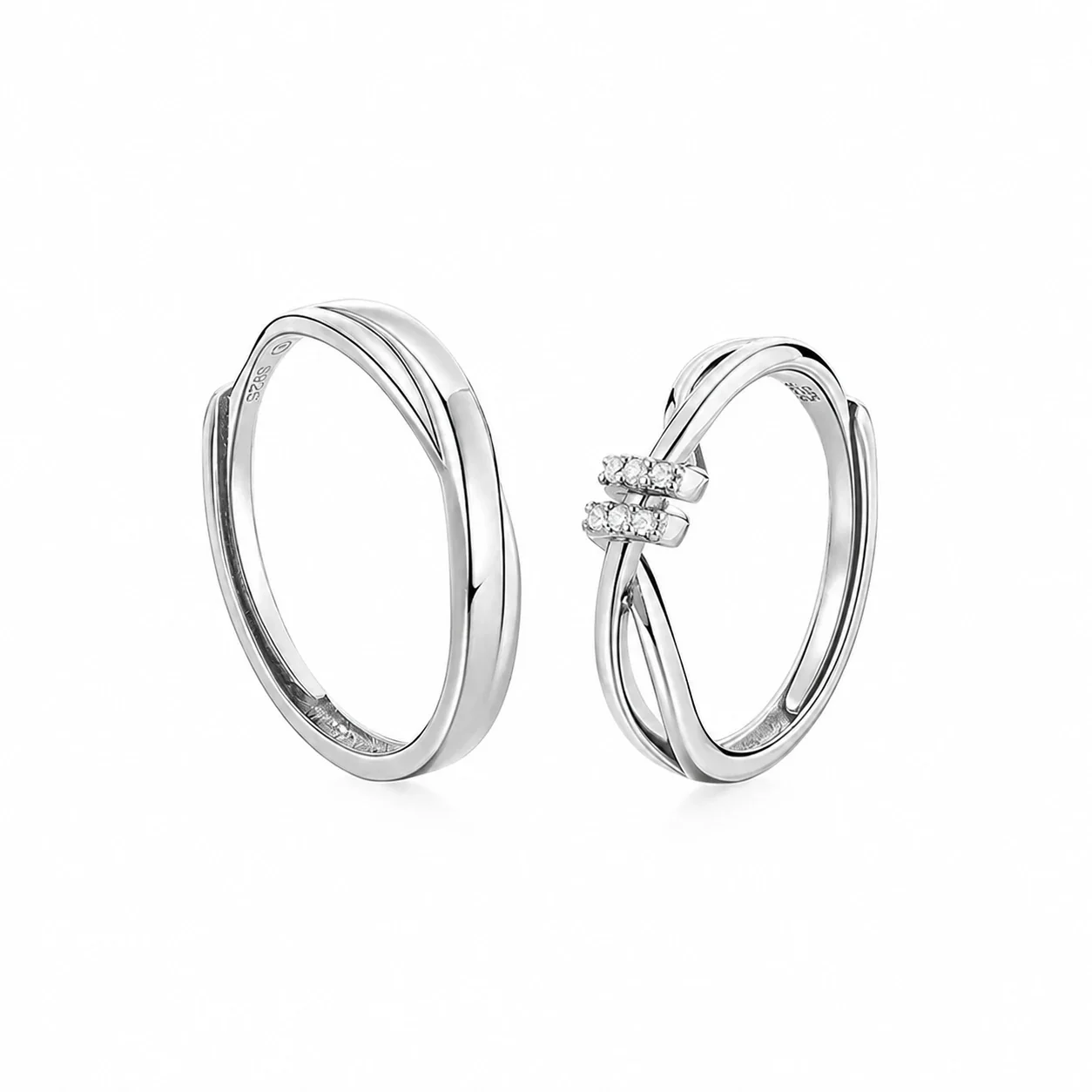
Yes, sterling silver tarnishes. It is 92.5% silver and 7.5% other metal, usually copper, and both metals react with sulfur gases in ordinary air to form a dark sulfide film that turns yellow, then brown, then black as it thickens. A green or black mark on skin usually comes from the copper in the alloy reacting with sweat, salt, lotion or cosmetics, or from makeup grinding tiny metal particles off the piece; the mark is not harmful and washes off with soap and water. Neither tarnish nor a skin mark proves a piece is fake, and neither proves it is real.
This page explains the chemistry behind tarnish, what speeds it up, why skin sometimes turns green or black under a ring, how sterling silver relates to nickel allergy, what happens when rhodium or gold plating wears through, and how a retailer can explain all of this to customers without overpromising. Every outside fact below names its source.
Does sterling silver tarnish? What the dark film actually is
Sterling silver is an alloy, not pure silver. In the United States, federal law allows the word "sterling" only on articles containing 925/1000 parts pure silver (15 U.S.C. § 296), and the FTC Jewelry Guides say "Sterling Silver" may be used only for products that are at least 925/1,000ths pure silver (16 CFR § 23.5). The remaining 7.5% is usually copper, added because fine silver (99.9%) is too soft for rings, chain links and clasps.
The Canadian Conservation Institute (CCI), a federal conservation body, describes tarnish this way:
- On pure silver, tarnish is silver sulfide (Ag2S, the mineral acanthite), which forms when silver reacts with sulfur-containing gases in the air. The main gas is hydrogen sulfide (H2S).
- On sterling silver, the tarnish also contains copper sulfide (Cu2S). Copper is more reactive than silver, and the tarnishing rate of silver-copper alloys rises with copper content.
- Colour follows thickness. As the film grows from 10 to 100 nanometres (nm), the colour moves from yellow through red-brown to blue. Above about 100 nm it is black, the true colour of silver sulfide.
So the answer to "why does silver turn black?" is literally a layer of black silver sulfide on the surface, not dirt and not dye. The CCI also notes that sterling silver (92.5% silver, 7.5% copper) tarnishes faster than the pure silver layer on a silver-plated object. Wikipedia's sterling silver entry adds that sulfur compounds in air come from the burning of fossil fuels and some industrial processes, and that low-level ozone can form silver oxide.
How fast sterling silver tarnishes, and what speeds it up
There is no fixed number of days. The rate depends on how much sulfur gas reaches the surface, how humid the air is and how much copper is in the alloy. The CCI gives these reference points:
- Normal air: hydrogen sulfide is typically present at 86 to 600 parts per trillion (ppt). In a museum setting, a dark layer of tarnish may take months or years to form.
- Humidity: for a given hydrogen sulfide concentration, silver tarnishes faster as relative humidity (RH) climbs. The CCI recommends storing silver below 50% RH.
- Strong sulfur sources: silver exposed to a freshly hard-boiled egg tarnishes within minutes rather than months. The CCI's list of sulfur sources includes vulcanized rubber, wool and wool felt, certain paints, protein-based glues, foods such as eggs, and people.
- Copper content: more copper in the alloy means a faster tarnishing rate.
For a jewelry shop, that translates into practical habits: keep stock away from rubber bands and wool felt pads, keep display cases and storage dry, and seal pieces that will sit for a while. The CCI recommends placing individual silver objects in polyethylene bags sealed with tape, heat sealing or a self-sealing closure, and notes that cloths embedded with tiny silver particles work well because the sulfur gases react with the silver in the cloth first.
Cleaning has a cost. The CCI states that each time an object tarnishes and is cleaned, some silver is lost, and that polishing can damage or remove a thin silver plating entirely. It also warns that polishes containing ammonia dissolve some copper, which can react further and turn the polish residue green. Our separate guide on how to clean sterling silver jewelry covers methods in detail.
Does sterling silver turn your skin green or black?
It can. Two different mechanisms produce two different colours.
Green marks: copper reacting with sweat and products on skin
Dermatologist Jennifer Adams, MD, of Nebraska Medicine explains that the green colour comes from a chemical reaction between copper and things like water or chemicals, including sweat, lotion and other products on the skin. It happens most with copper-based jewelry under silver or gold plating, though it can also happen with other metals. Sterling silver contains copper (7.5% in the CCI's example alloy), so a green ring on the finger is possible with genuine sterling, especially where the skin is damp or salty. A trade article on the Esslinger Watchmaker Supplies blog notes that rings containing copper and silver alloys, "particularly sterling silver, corrode readily on the skin if enough salt is present."
Dr Adams states the green residue is not harmful and washes off with soap and water. Her suggested remedies are having the jewelry recoated with precious metal, or covering the inside with clear nail polish, which has to be reapplied from time to time.
Black or grey marks: makeup acting like fine sandpaper
The same Esslinger article names makeup on skin or clothing as the most common cause of black smudges. Cosmetics can contain zinc oxide, titanium dioxide, ferric oxide and calamine, which are harder than jewelry metals. They wear off tiny metal particles, and very finely divided metal looks black, not shiny. Perspiration also contains fats and fatty acids, enough to corrode even 14K gold alloys. The suggested fixes are removing jewelry while applying makeup, cleaning the skin that touches the jewelry, and reducing salt exposure.
Causes at a glance
| Cause | What you see | What it means | What to do | Source |
|---|---|---|---|---|
| Sulfur gases (hydrogen sulfide) in air | Yellow, then red-brown, blue, finally black film on the piece | Normal silver sulfide and copper sulfide tarnish; black above about 100 nm | Polish or clean; store sealed and dry (below 50% RH) | CCI |
| High humidity | Faster darkening of the same piece | Tarnish rate rises with RH | Dry storage, sealed polyethylene bags | CCI |
| Rubber, wool felt, eggs and similar sulfur sources | Rapid darkening, sometimes within minutes | Concentrated sulfur exposure | Keep stock away from these materials | CCI |
| Copper in the alloy reacting with sweat, salt or lotion | Green band on skin | Copper corrosion product; not harmful | Wash skin with soap and water; dry the piece; recoat or clear-coat the inside | Nebraska Medicine; Esslinger |
| Cosmetics with zinc oxide or titanium dioxide | Black or grey smudge on skin or clothing | Fine metal particles abraded off the piece | Put jewelry on after makeup; clean contact skin | Esslinger |
| Ammonia-based polish | Green residue after polishing | Ammonia dissolved some copper | Rinse residue; choose a polish without ammonia | CCI |
| Itchy, red rash where metal touches skin | Rash appearing hours to days after contact | Possible allergic contact dermatitis, often nickel | See a doctor; a dermatologist can patch test | NHS; Wikipedia (nickel allergy) |
Is it fake if it tarnishes or turns green? Is sterling silver real silver?
Sterling silver is real silver: 925 parts per 1,000 by weight, with US law allowing a tolerance of 4/1000 below the marked fineness, or 10/1000 when the whole article including solder is tested (15 U.S.C. § 296). A piece of real sterling will tarnish, because silver sulfide is what silver forms in normal air. Tarnish is evidence of silver chemistry, not of fakery.
A skin mark proves even less. Green comes from copper, which genuine sterling contains; brass or copper jewelry under a thin silver plate also contains copper and can leave the same mark. Black smudges come from makeup abrading almost any metal. So neither "it turned my finger green" nor "it never marked my skin" tells you whether the piece is sterling.
What does tell you is a test of the metal itself. The ways a jeweler or an assay office checks silver include:
- X-ray fluorescence (XRF). The London Assay Office says the vast majority of its assaying is done by XRF, an entirely non-destructive technique that gives the fineness of the metal in less than 30 seconds. The Sheffield Assay Office describes it as ideally suited to avoiding damage.
- Silver titration. Analysis of the pure silver portion within a silver alloy. For this and the other traditional methods except touch testing, the London Assay Office says a physical sample must be taken from the article by scraping or drawing.
- Touch testing. The article is lightly rubbed on a touchstone made from basanite and the streak is assessed.
Plating complicates any surface test, because the outer layer may not be the same metal as the body. The London Assay Office notes that traditional sampling may require removing the surface layer to assess the alloy underneath. Marks matter too: in the US, the FTC says the unqualified word "silver" must not be used for a coated product unless it is clearly qualified as only coated (16 CFR § 23.5). Our article what does 925 Italy mean explains the 925, S925, STER and hallmark stamps a retailer will see.
Sterling silver and metal allergy: what the medical sources say
Allergic contact dermatitis is different from a harmless green mark. The NHS lists some metals, including nickel, among its triggers and says the reaction usually occurs within a few hours or days of exposure. Key published figures on nickel:
- Wikipedia's nickel allergy entry calls it the most common contact allergy in industrialized countries, affecting around 8% to 19% of adults and 8% to 10% of children, with estimates of 4% of men and 16% of women worldwide.
- The American Academy of Dermatology states that more than 18 percent of people in North America are allergic to nickel, including 11 million children in the US, and that earrings, earring backs and watches are some of the biggest culprits, though necklaces, rings and bracelets containing nickel can also trigger symptoms.
- The rash usually appears within 12 to 120 hours and can last 3 to 4 weeks or for as long as contact continues (Wikipedia, nickel allergy).
- The American Academy of Family Physicians cites patch-test data in which nickel caused contact dermatitis in 14.3 percent of patients in one analysis and 14.7 percent in another, and lists nickel as a component of white gold, German silver, nickel and gold plating, solder and stainless steel.
- DermNet notes that nickel was named Contact Allergen of the Year for 2008 by the American Contact Dermatitis Society.
Where does sterling silver fit? The alloying metal in sterling is usually copper, not nickel (Wikipedia; CCI). That describes the alloy definition only. A finished piece can also include plating layers, solder, clasps, ear posts or findings, and the AAFP list shows that plating and solder are among the places nickel can appear. Whether a specific piece releases nickel is a question for that piece, not for the word "sterling".
Two tools exist for that question. DermNet describes a home spot test using a solution of 1% dimethylglyoxime and 10% ammonium hydroxide: if the cotton bud turns pink after rubbing the item, it contains nickel. In the European Union, the nickel restriction (Regulation (EC) No 1907/2006, Annex XVII, entry 27, carried over on 1 June 2009 from Directive 94/27/EC of 30 June 1994) limits nickel release to 0.5 µg/cm²/week for articles in direct and prolonged skin contact and 0.2 µg/cm²/week for posts inserted into pierced ears, measured by the EN 1811 method using artificial sweat over one week. Denmark's earlier rules coincided with sensitization among Danish children aged 0 to 18 falling from 24.8% to 9.2% between 1985 and 1998.
Rhodium and gold plating on sterling silver, and what happens when it wears
Much sterling jewelry is sold with a coating. The two common ones:
- Rhodium. Rhodium is applied as an electroplate because of its cost. It is used on white gold and platinum for a reflective white surface, "after which the thin layer wears away with use," and it may be applied to sterling silver as a protective coating against tarnish caused by atmospheric hydrogen sulfide (Wikipedia, rhodium).
- Gold. Under the FTC Guides, "gold electroplate" needs at least 0.175 microns of fine gold equivalent, and "heavy gold electroplate" at least 2.5 microns (16 CFR § 23.3). "Vermeil" means sterling silver coated with gold of at least 10 karat to a minimum of 2.5 microns, and calling it vermeil is deceptive if a base metal such as nickel sits under the gold without disclosure (16 CFR § 23.4). The difference between these terms is set out in gold plated vs gold filled vs vermeil.
Any plating is a surface layer. Where it wears through, at the inside of a ring shank, a clasp or a chain link that rubs, the sterling underneath is exposed to the same sulfur chemistry as uncoated silver and can darken there, and the copper in it can again mark the skin. The CCI's warning applies here too: polishing can remove a thin plating entirely, so plated pieces need gentler cleaning than bare sterling. Dr Adams's suggested fix for green marks from plated jewelry is recoating with precious metal.
How retailers can explain tarnish and skin marks to customers
Questions about tarnish and green fingers come up with almost every silver line. A short, accurate script works better than a promise you cannot keep:
- Say what sterling is. "Sterling silver is 92.5% silver and 7.5% other metal, usually copper. That is the legal meaning of 925."
- Say that tarnish is normal. "Real silver darkens over time because it reacts with sulfur in the air. Damp air, rubber and wool speed it up. A silver polishing cloth or the right cleaner brings the shine back."
- Explain skin marks without blame. "A green mark is the copper reacting with sweat or lotion; it washes off and is not harmful. Black smudges usually come from makeup rubbing tiny metal particles off."
- Separate marks from allergy. "An itchy rash is different. If that happens, take the piece off and see a doctor."
- Describe plating honestly. "This piece is sterling silver with a gold-colour (or rhodium) finish. Finishes wear with use."
- Give storage advice. "Keep it in a sealed bag, somewhere dry, away from rubber bands."
Avoid wording your supplier records cannot support: performance promises about tarnish, allergy claims, and testing claims that no one has actually carried out on that piece.
What AdornTrade lists on a 925 base
AdornTrade lists 627 sterling silver pieces and 415 moissanite pieces, and the moissanite pieces are currently all set on 925 sterling silver, which makes 1,042 listings on a 925 base. In a count on 2 October 2026 of 764 such listings, the supplier's source title marked the metal as "S925" in 612, as "925" without the S in 145, and the remaining 7 stated 925 in the specification field instead of the title. On 3 October 2026, 101 listings in the silver family offered a gold-colour option and 15 a rose-colour option; these are colour options supplied by the factories. Browse the range at sterling silver jewelry or see order terms on the wholesale sterling silver jewelry page.
Questions people ask
Does sterling silver tarnish?
Yes. Sterling silver reacts with sulfur gases such as hydrogen sulfide to form silver sulfide and copper sulfide, which look yellow at first and black once the film passes about 100 nm (CCI).
Why does silver turn black?
Because black is the true colour of silver sulfide. The thicker the sulfide film, the darker it looks; humidity, rubber, wool and eggs make it form faster.
Does sterling silver turn your skin green?
Sometimes. The 7.5% alloy portion is usually copper, and copper reacting with sweat, salt or lotion leaves a green residue. Nebraska Medicine's dermatologist says it is not harmful and washes off with soap and water.
Is sterling silver real silver?
Yes. It is 925/1000 silver by law in the US (15 U.S.C. § 296; 16 CFR § 23.5). Silver-plated jewelry is a different product: a thin silver layer over another metal, which the FTC says must be qualified as coated.
If my ring turned my finger green, is it fake?
Not necessarily. Real sterling contains copper and can leave a green mark; plated base metal can too. Only a metal test such as XRF, titration or touchstone testing settles the question.
How can I slow tarnish down?
Store pieces dry (the CCI suggests below 50% RH), sealed in polyethylene bags, away from rubber and wool, and wipe off sweat and lotion after wear. See how to clean sterling silver jewelry for removal methods.
Accuracy reviewed by: Alex Hou, Founder, AdornTrade
Sources
- Canadian Conservation Institute — Understanding how silver objects tarnish (Ag2S/Cu2S; 10–100 nm colour sequence, black above ~100 nm; H2S 86–600 ppt; store below 50% RH; sulfur sources; egg test)
- Canadian Conservation Institute — Care of silver (black silver sulphide from hydrogen sulphide; ammonia polish dissolves copper, green residue; sealed polyethylene bags; silver-particle cloths)
- Wikipedia — Sterling silver (92.5% silver, 7.5% other metals usually copper; silver sulfide tarnish from airborne sulfur; ozone; germanium/argentium alloys)
- 15 U.S.C. § 296 — Standard of fineness of silver articles (sterling = 925/1000; 4/1000 and 10/1000 tolerances)
- 16 CFR § 23.5 — FTC Jewelry Guides: Misrepresentation as to silver content (sterling at least 925/1,000; coated products must be qualified)
- 16 CFR § 23.4 — FTC Jewelry Guides: Vermeil (sterling base, gold ≥10 karat, ≥2.5 microns; nickel underlayer must be disclosed)
- 16 CFR § 23.3 — FTC Jewelry Guides: Gold electroplate ≥0.175 microns; heavy gold electroplate ≥2.5 microns
- Wikipedia — Rhodium (electroplated on white gold and platinum, thin layer wears away; applied to sterling silver against tarnish from hydrogen sulfide)
- Nebraska Medicine (Jennifer Adams, MD) — Why does some jewelry turn my skin green? (copper oxidation with sweat/lotion; not harmful, washes off; recoat or clear nail polish)
- Esslinger Watchmaker Supplies — Why jewelry sometimes blackens the skin or clothing (makeup abrasion: zinc oxide, titanium dioxide; sterling corrodes on skin with salt)
- American Academy of Dermatology — Nickel allergy: how to avoid exposure and reduce symptoms (>18% in North America; 11 million US children; earrings, earring backs, watches)
- Wikipedia — Nickel allergy (most common contact allergy in industrialized countries; 8–19% adults; 4% men/16% women; rash 12–120 h, lasts 3–4 weeks; Denmark 24.8%→9.2%)
- Wikipedia — Nickel Directive (94/27/EC of 30 June 1994; 0.2 and 0.5 µg/cm²/week; EN 1811; in Annex XVII entry 27 of Regulation 1907/2006 since 1 June 2009)
- DermNet — Nickel allergy (one of the most common causes of allergic contact dermatitis; Contact Allergen of the Year 2008; dimethylglyoxime spot test 1%/10%)
- American Academy of Family Physicians — Diagnosis and Management of Contact Dermatitis (nickel 14.3% / 14.7% of patch-tested patients; nickel in white gold, German silver, nickel and gold plating, solder)
- NHS — Contact dermatitis (metals including nickel as triggers; reaction within a few hours or days)
- London Assay Office — Our hallmarking methods (XRF non-destructive, fineness in under 30 seconds; silver titration; touchstone; scrape samples)
- Sheffield Assay Office — Jewellery testing in the 21st century (XRF non-destructive; potentiometric titration for silver)
From the catalogue