Your shopping bag is empty.
Explore productsBuyer guides
How to Tell If Sterling Silver Is Real: 925 Marks, Home Tests and a Price Check
By Alex Hou, Founder, AdornTrade 2026-10-04 13 min read
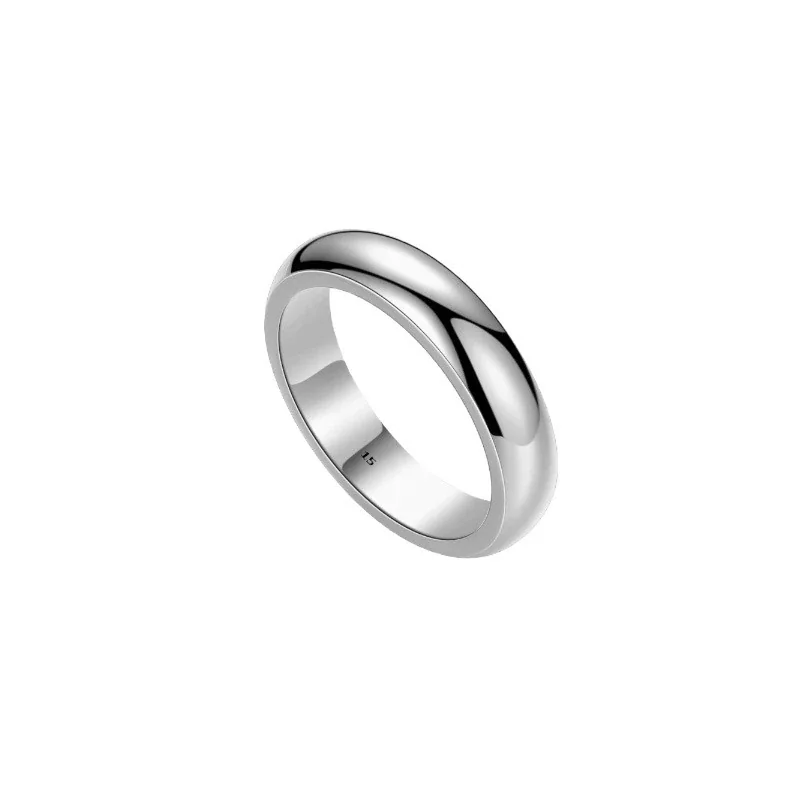
How to tell if sterling silver is real: start with the mark, then use a test that measures the metal rather than guesses at it. A stamp reading 925, S925, .925, STER or STERLING claims that the metal is at least 925 parts silver per 1,000. In the US, a sterling mark must also be backed by a registered trademark of the maker or seller, and in the UK a silver piece weighing 7.78 g or more needs an assay office hallmark before it can be sold as silver. Home checks (magnet, ice cube, white cloth) can only rule out some fakes; none of them can prove an item is 925. The two checks that give an actual silver figure are an acid test on a filed spot and an XRF reading, both done by a jeweller or an assay office. Finally, a price check helps: at the 2 October 2026 silver price, 1 g of sterling contains about $1.82 of silver, so a "925" piece offered for less than its own silver content needs a closer look.
This page explains what 925 means on jewelry, what US and UK law requires behind a sterling mark, which sterling silver test is reliable and which is not, how plating and "silver tone" wording confuse the picture, and how AdornTrade labels its own 925 pieces. Third-party facts come from the US Code, the FTC Jewelry Guides, the UK Hallmarking Guidance Notes, the London Assay Office and the reference works listed under Sources.
What does 925 mean on jewelry?
925 is a fineness number: 925 parts pure silver per 1,000 parts of metal, or 92.5%. The other 75 parts are other metals added for hardness, because pure silver is too soft for ring shanks, clasps and chain links. Sterling silver is defined by that number. The FTC Jewelry Guides (16 CFR § 23.5) allow the words "Sterling Silver", "Sterling" or "Ster." only on a product, or part of a product, that is at least 925/1,000ths pure silver. So yes, 925 silver is real silver: it is the standard alloy, not an imitation, as long as the metal behind the stamp actually meets it.
| Mark on the piece | What it claims | Silver content claimed |
|---|---|---|
| 925 | Fineness in parts per thousand | 925 / 1,000 (92.5%) |
| .925 | The same fineness written as a decimal | 0.925 (92.5%) |
| S925 | The same fineness with an S for silver; the letter-plus-number form used across the Chinese market | 925 / 1,000 (92.5%) |
| Ag925 | The same fineness with Ag, the chemical symbol for silver | 925 / 1,000 (92.5%) |
| STERLING, STER | Sterling silver (FTC: at least 925/1,000ths) | 925 / 1,000 minimum |
| 800, 958, 999 | Other silver standards recognised for UK and Convention hallmarks | 800, 958 or 999 / 1,000 |
| Coin, coin silver | FTC: at least 900/1,000ths | 900 / 1,000 minimum |
S925 meaning, in one line: S925 and 925 make exactly the same claim, 92.5% silver; the S only names the metal. A stamp is a statement by whoever struck it, not a measurement, and a punch reading S925 costs the same as one reading 925. For the "925 Italy" stamp and the Italian maker's mark, see What does 925 Italy mean on jewelry?
What US law requires behind a sterling mark
The National Gold and Silver Stamping Act (15 U.S.C. §§ 294–300) sets the numbers and the paperwork behind a US silver mark:
- Fineness (§ 296): an article marked "sterling" or "sterling silver" must contain 925/1,000 parts pure silver; "coin" or "coin silver" means 900/1,000. A divergence of 4/1,000 is allowed when the metal parts are tested without solder. When the whole article is assayed including all solder, the result may not fall more than 10/1,000 below the marked fineness. The 2 tests are concurrent: both must pass.
- Trademark (§ 297): anyone who applies a quality mark such as "sterling" or "925" must also apply their own trademark, registered or applied for in the US within 30 days of the article entering commerce. It has to be applied by the same method as the quality mark, in lettering at least as large, and as close to it as possible. A bare "925" with no maker's mark next to it therefore falls short of § 297 on a piece sold in the US.
The FTC Jewelry Guides add the advertising rules. Under 16 CFR § 23.5, the word "silver" is acceptable when an equally conspicuous fineness number in parts per thousand immediately precedes it, as in "925 silver"; "solid silver", "Sterling Silver", "Sterling" and "Ster." require at least 925/1,000ths; a product that is only coated with silver may not be called "silver" without a qualification making the coating clear; and a product called silver plated must carry a plating of reasonable durability on all significant surfaces. Note 1 to § 23.5 records that the Stamping Act bars plated articles from being marked "sterling" or "coin".
UK hallmarks and the Common Control Mark
The UK goes further than a maker's stamp. Under the Hallmarking Act 1973, as set out in the government's Hallmarking Guidance Notes, it is an offence in the course of business to describe an un-hallmarked article as silver, or to supply one so described. A description can be spoken, written, or a manufacturer's fineness stamp on the piece itself. The rule covers e-commerce and market stalls as well as shops.
| UK hallmarking fact | Figure |
|---|---|
| Exemption weight for silver (total metal weight, including any base metal) | Below 7.78 g |
| Exemption weight for gold / palladium / platinum | 1.0 g / 1.0 g / 0.5 g |
| Compulsory marks in a hallmark | 3: sponsor's (maker's) mark, metal and fineness mark, assay office mark |
| UK assay offices | 4: London, Birmingham, Sheffield, Edinburgh |
| Silver finenesses under the Convention | 800, 925, 958, 999 |
| UK signatory to the International Convention on Hallmarks since | 1972 |
The Common Control Mark (CCM), a set of scales, is the Convention hallmark. UK assay offices can strike it, and CCM marks from other member countries are legally recognised in the UK without re-hallmarking. A Convention hallmark has 4 parts: sponsor's mark, CCM, fineness mark and assay office mark. On smaller articles carrying the type 1 CCM, which has the fineness built into its design, the separate fineness mark can be left off. A full hallmark is the strongest marking evidence on a piece because an independent assay office tested the metal before striking it.
Sterling silver test: what each home check actually proves
Most "how to tell if silver is real" advice is a list of home tests. They differ a lot in what they can show. The table below gives a definite verdict for each one, based on the physical properties of the metals involved.
| Test | What real silver does | What it cannot tell you | Verdict |
|---|---|---|---|
| Magnet | Silver is diamagnetic, so it is not attracted | Copper is diamagnetic too, so copper and copper-alloy cores pass as well | Rules out iron and steel fakes only |
| Ice cube | Ice melts fast: silver conducts heat at 429 W/(m·K), sterling at 361 | Copper conducts at 401 W/(m·K), so silver-plated copper behaves almost the same | Separates silver from steel (16–24) and 70% copper brass (109–121), not from copper |
| White cloth rub | A black mark comes off old silver: that is silver sulphide tarnish | It identifies the dark film, not the metal under it; a new or lacquered piece leaves no mark | Shows a tarnish layer, not the metal |
| Bleach drop | The surface darkens | It damages the piece and gives no fineness figure | Do not use |
| Acid on a filed spot (touchstone) | Reacts as silver of a given fineness | Reads only the spot tested; needs a test kit and practice | Reliable when done by a jeweller |
| XRF | Gives a fineness reading in under 30 seconds | Needs a calibrated instrument at a jeweller or assay office | Reliable, non-destructive |
Three points matter more than any single test:
- The magnet test only proves a negative. If a piece sticks to a magnet, it is not solid sterling. If it does not stick, you have ruled out iron and steel, nothing more.
- The ice test cannot separate silver from copper. Silver has the highest thermal conductivity of any metal, but copper is only about 7% lower, and silver plating over copper behaves almost the same.
- The professional tests sample the metal. The London Assay Office lists XRF as its non-destructive method and silver titration, cupellation and touchstone testing as its traditional methods; for all the traditional methods except touch testing, a physical sample is scraped or drawn from the article. That is why a jeweller files a small notch before applying acid: the reading should come from the metal under any surface layer.
Bleach deserves a separate warning: it attacks the surface you are trying to judge, and a colour change on a damaged spot is not a fineness reading. Bleach is not among the test methods the London Assay Office lists. For safe cleaning steps, and why chlorine is kept away from jewelry, see How to clean sterling silver jewelry.
Silver plated, silver tone and German silver
Four labels look alike on a listing and mean very different things:
| Label | What the metal is | Silver content |
|---|---|---|
| 925 / sterling silver | A silver alloy throughout | At least 925 / 1,000 |
| Silver plated | A thin silver layer over a base metal (FTC: must cover all significant surfaces) | Silver only in the surface layer |
| Silver tone, silver colour | A colour description, not a metal description | None claimed |
| German silver, nickel silver, alpacca | A copper-nickel-zinc alloy, typically 60% copper, 20% nickel, 20% zinc | 0: it contains no silver |
German silver is the label most often misread. It was named for its colour, and it is a common base for silver plating (sold as EPNS, electroplated nickel silver) because worn-through spots are hard to see against it. Plating also confuses the home tests: a silver-plated copper piece passes the magnet test, the ice test and the cloth test. A different coating can work the other way. Some sterling silver jewelry is given a bright white metal plating such as rhodium, and the surface you see and touch is then the plating, not the 925 underneath. In both cases only a reading taken below the surface, or a hallmark from an assay office, settles what the base metal is.
Plated sterling is still sterling, and the plating only adds a surface. What a plated base metal cannot legally carry, under the Stamping Act, is a "sterling" or "coin" mark. If you want to know why sterling silver darkens over time or leaves a green line on some skin, see Does sterling silver tarnish or turn skin green?
A price check: what the silver in a 925 piece is worth
Price is not proof, but it is a useful filter, because the silver inside a 925 piece has a market value you can calculate. The method has 3 steps:
- Take a dated silver spot price per gram. On 2 October 2026 at 09:32 GMT, FXStreet reported silver at $61.24 per troy ounce, or $1.97 per gram.
- Multiply by 0.925 for sterling: $1.97 × 0.925 = $1.82 of silver per gram of 925 metal.
- Multiply by the metal weight of the piece. Stones, pearls and enamel do not count, so a set piece contains less silver than its total weight.
| Metal weight of a 925 piece | Silver value at $1.97/g × 0.925 |
|---|---|
| 1 g | $1.82 |
| 2 g | $3.64 |
| 3 g | $5.47 |
| 5 g | $9.11 |
| 10 g | $18.22 |
| 20 g | $36.45 |
A finished piece also carries the cost of casting, finishing, any plating and stones, and packing, so a genuine 925 price sits above this metal value. If a quote for a "925" item is below the silver it should contain, ask for the metal weight, the supplier's material record and, where needed, a test result before ordering. The spot price moves daily, so redo the sum with the price on the day you compare.
How AdornTrade labels its 925 sterling silver
Our listing rule for silver is simple: a piece goes on the shelf as 925 sterling silver only when the supplier's own source record states 925 or S925. As of 4 October 2026, 821 published pieces carry the material field "925 sterling silver": 381 in the 925 sterling silver family and 440 in the moissanite family, where every stone is set in 925 silver. Each product page shows the same value under "Base metal". On the same date, the latest supplier source titles stated the metal as follows:
| How the supplier's source title states the metal | Pieces | Share |
|---|---|---|
| Writes "S925" | 666 | 81.1% |
| Writes "925" without the S | 148 | 18.0% |
| States 925 in the specification fields rather than the title | 7 | 0.9% |
These are the suppliers' material statements and the basis for our listing; if your market or a customer asks for a measured figure, an XRF reading or an assay office test on a sample piece gives one. The live range is currently 627 sterling silver pieces and 415 moissanite pieces, browsable by type on the wholesale sterling silver jewelry page. For the checks we suggest on any 925 supplier, including us, see how to check a 925 sterling silver wholesale listing.
For retailers: explaining 925 to a customer
- Say what the number means: "925 means 92.5% silver; it is sterling silver, the standard alloy for silver jewelry."
- Describe it the way the record does: if the supplier record says S925, "925 sterling silver" is the matching description. Keep "silver plated", "silver tone" and "German silver" items clearly separate on the shelf and in listings.
- Know your market's rule: selling to UK consumers, a silver item of 7.78 g or more needs a UK or Convention hallmark before it is described as silver. Selling in the US, a quality mark needs a trademark beside it under 15 U.S.C. § 297.
- Answer the "is it real?" question with the right test: point customers to a jeweller's acid or XRF test rather than a magnet, which only rules out steel.
FAQ
Is 925 silver real silver?
Yes. 925 silver is sterling silver: 925 parts silver per 1,000. It is the alloy most silver jewelry is made from, provided the metal meets the number stamped on it.
What does S925 mean?
S925 means 92.5% silver, the same claim as 925 or Ag925. The S stands for silver.
Does real sterling silver stick to a magnet?
No. Silver is diamagnetic. A piece that sticks is not solid sterling, but a piece that does not stick could still be copper, brass or plated base metal.
What is the most reliable sterling silver test?
An XRF reading or an acid test on a filed spot, done by a jeweller or an assay office. In the UK, a full hallmark means an assay office has already tested the metal.
Can a piece be stamped 925 and not be sterling?
Yes. A stamp is applied by the maker or seller. That is why US law requires the maker's trademark beside the mark and why the UK requires independent hallmarking above 7.78 g.
Accuracy reviewed by: Alex Hou, Founder, AdornTrade
Sources
- 15 U.S. Code § 296 — Standard of fineness of silver articles; deviation (sterling 925/1,000, coin 900/1,000, 4/1,000 and 10/1,000 tolerances)
- 15 U.S. Code § 297 — Trademark requirement for articles bearing a quality mark (registered or applied for within 30 days, same method, lettering at least as large, as close as possible)
- 16 CFR § 23.5 — FTC Jewelry Guides: Misrepresentation as to silver content (fineness designation, Sterling/Ster. at least 925/1,000ths, coin 900, silver plated; Note 1)
- UK Government — Hallmarking Guidance Notes (Hallmarking Act 1973 offence, 7.78 g silver exemption, 3 compulsory marks, 4 assay offices, Common Control Mark, Convention finenesses 800/925/958/999)
- London Assay Office — Our hallmarking methods (XRF non-destructive in under 30 seconds; silver titration, cupellation, touchstone; scraped sample for traditional methods)
- Wikipedia — Silver (thermal conductivity 429 W/(m·K), diamagnetic, highest thermal conductivity of any metal, black silver sulfide tarnish)
- Wikipedia — Copper (thermal conductivity 401 W/(m·K), diamagnetic)
- Wikipedia — List of thermal conductivities (sterling silver 361, brass Cu70% 109–121, stainless steel 16.3–24 W/(m·K))
- Wikipedia — Nickel silver (German silver/alpacca contains no silver; 60% copper, 20% nickel, 20% zinc; EPNS plating base)
- FXStreet — Silver price today, 2 October 2026 09:32 GMT ($61.24 per troy ounce, $1.97 per gram)
- Légifrance — Code de commerce, Titre III : Du commerce des matières d'or, d'argent et de platine (L832-2 titres légaux de l'argent 999/925/800, L832-5 titre non légal interdit, L833-1 poinçon de garantie, L833-2 dispenses)
- Légifrance — Code général des impôts, annexe III, art. 183 à 186 ter (poinçons de maître et de responsabilité ; seuil de dispense de la garantie du titre : moins de 30 g pour l'argent)
- BOE — Ley 17/1985, de 1 de julio, sobre objetos fabricados con metales preciosos (art. 9 leyes de la plata 999/925/800 sin tolerancia en menos; contrastes de identificación de origen y de garantía; art. 13.2 objetos de la UE)
- Gesetze im Internet — Gesetz über den Feingehalt der Gold- und Silberwaren (FeinGehG: § 1 jeder Feingehalt zulässig, § 2 Silbergeräte ab 800, § 3 Stempelzeichen, § 5 Schmucksachen in jedem Feingehalt, § 9 Geldbuße bis 5.000 Euro)
- Camera di Commercio di Bari — Metalli preziosi (D.Lgs. 251/1999, D.P.R. 150/2002: titoli legali dell'argento 925 e 800; marchio di identificazione con stella a cinque punte, numero caratteristico e sigla della provincia)
- Ondernemersplein (Rijksoverheid) — Goud, zilver of platina verkopen: keurmerk verplicht voor zilveren voorwerpen van 8 gram of meer; waarborginstellingen WaarborgHolland en Edelmetaal Waarborg Nederland
- Contrastaria (INCM) — Marcas legais da Contrastaria portuguesa, Lei n.º 98/2015 (toques da prata 999/925/835/830/800; marca de responsabilidade e marca de contrastaria; marcas UE/EEE reconhecidas, art. 11.º RJOC)
From the catalogue