Your shopping bag is empty.
Explore productsBuyer guides
Sterling Silver vs Stainless Steel vs Gold-Plated Jewelry: Which Is Better?
By Alex Hou, Founder, AdornTrade 2026-10-03 13 min read
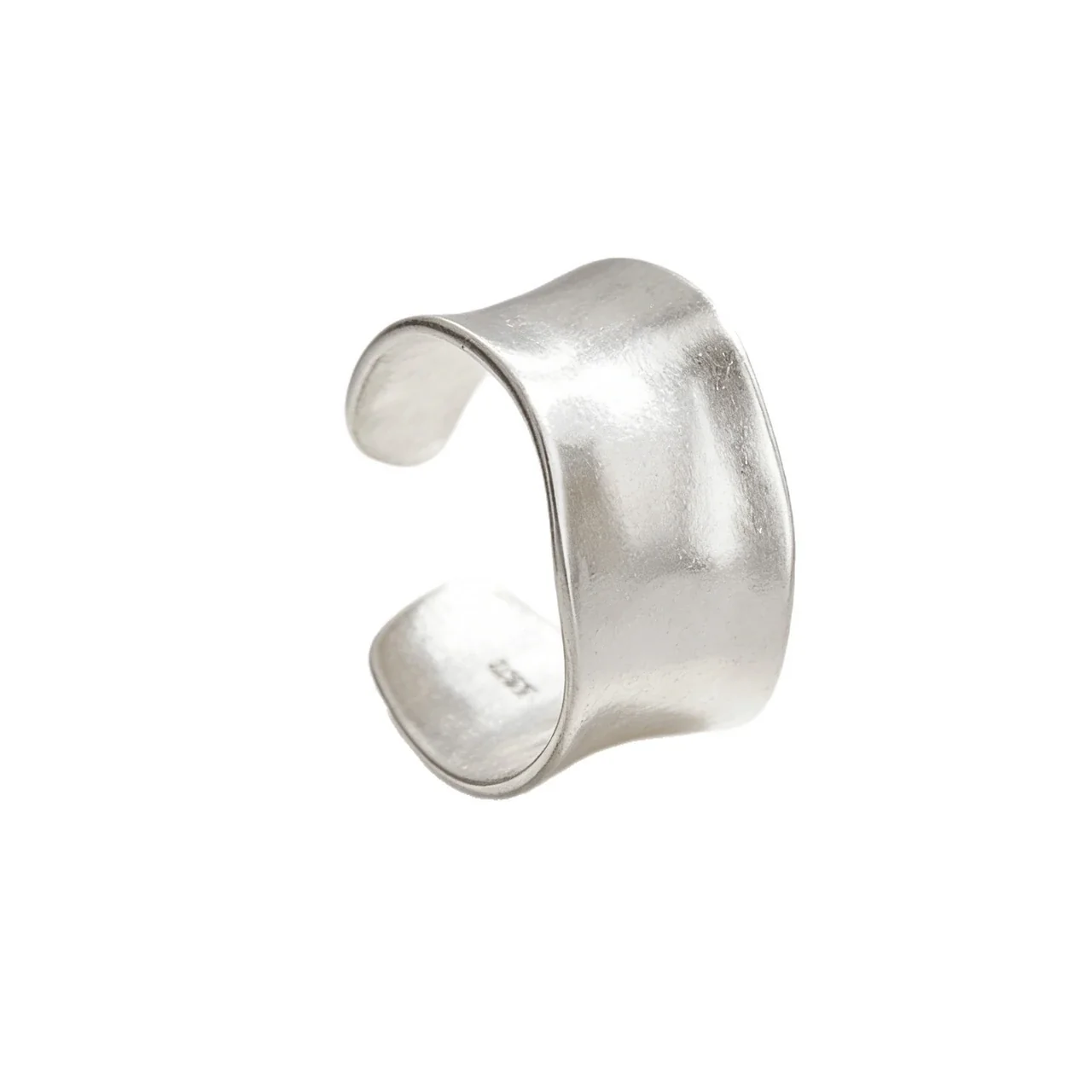
Sterling silver is a precious metal (at least 925 parts silver per 1,000) that darkens over time but can be cleaned and polished back to its original colour. Stainless steel is an iron alloy with at least 10.5% chromium: harder, lighter and cheaper than silver, with a self-repairing oxide film on its surface, but it has no precious-metal value. Gold-plated jewelry on a brass or copper base gives the look of gold at the lowest price, but the gold is a surface layer, and how long it lasts depends on its thickness, which the words "gold plated" alone do not tell you.
That is the short answer to sterling silver vs stainless steel vs gold-plated. The rest of this page sets out the numbers behind each trade-off, with the source for every figure, and ends with two practical answers: which to buy for yourself, and which a small shop should stock. AdornTrade's catalogue spans sterling silver, moissanite on 925 silver, stainless steel, copper and pearl, so the comparison below is not written to favour one material.
Sterling silver vs stainless steel vs gold-plated: the comparison table
| Property | Sterling silver | Stainless steel | Gold-plated base metal (brass or copper) | Source |
|---|---|---|---|---|
| What it is | Alloy of 92.5% silver and 7.5% other metals, usually copper | Iron alloy with 10.5% or more chromium | A thin gold or gold-alloy layer over a base metal; brass is copper plus zinc | Wikipedia (Sterling silver, Stainless steel, Brass) |
| US legal standard for the name | "Sterling" only if at least 925/1,000 pure silver | No precious-metal marking rules apply | "Gold electroplate": at least 10 karat and 0.175 microns of fine gold; "heavy gold electroplate": 2.5 microns | 16 CFR § 23.5 and § 23.3 |
| Density | Pure silver 10.503 g/cm³ | 7.5 to 8.0 g/cm³ depending on alloy | Brass 8.4 to 8.73 g/cm³; copper 8.935 g/cm³ | Wikipedia (Silver, Stainless steel, Brass, Copper) |
| Mohs hardness | Silver 2.5 | Higher than silver; ordinary steel is listed at 4 to 4.5, and stainless alloys vary | Gold surface 2.5; copper underneath 2.5 to 3 | Wikipedia (Mohs scale) |
| How it ages | Forms black silver sulphide tarnish from sulphur in the air; can be polished off | A chromium-rich passive film protects the surface and can re-form when exposed to oxygen | The gold layer wears with use; base-metal atoms can diffuse into thin gold over time | Wikipedia; Canadian Conservation Institute |
| Metal value | Precious metal with a legal fineness standard | Base metal | Base metal, with a small amount of gold on the surface | 16 CFR Part 23 |
| Can it be refinished? | Yes, by polishing, though each polish removes a little silver | Yes, the surface can be repolished | Only by replating; polishing removes the gold | Canadian Conservation Institute |
What each metal actually is
Sterling silver
Sterling silver is an alloy of 92.5% silver and 7.5% other metals, usually copper. Fine silver, at 99.9% pure, is soft, so copper is added to make it hard and strong enough for ring shanks, clasps and chain links. In the United States the FTC Jewelry Guides allow the words "Sterling Silver", "Sterling" or "Ster." only for metal that is at least 925/1,000ths pure silver, and "coin silver" only for at least 900/1,000ths. Silver-plated or silver-coated pieces must be described in a way that makes clear they are only coated. The common stamps (925, S925, Sterling) and what each one tells you are covered in our guide to what 925 Italy and other silver marks mean.
Stainless steel
Stainless steel is not one metal but a family of iron alloys. What they share is a chromium content of 10.5% or more, which is what makes them "stainless": the chromium forms a thin passive film on the surface that protects the metal underneath and can heal itself when exposed to oxygen. The most widely used family, austenitic stainless steel, gets its structure largely from added nickel, which matters for the allergy section below. Jewelry suppliers rarely publish more than "stainless steel" for a given item, and the name alone does not tell you the exact alloy.
Gold-plated base metal
Gold-plated jewelry is a base metal, most often brass (copper and zinc) or copper, with gold deposited on the surface. Under the FTC Guides, the term "gold electroplate" is reserved for an electroplated layer of at least 10-karat gold with a minimum thickness of 0.175 microns, about 7 millionths of an inch, of fine gold. "Heavy gold electroplate" requires at least 2.5 microns, about 100 millionths of an inch. "Gold filled" is a different, mechanically bonded construction in which the gold layer is at least 1/20th of the total metal weight. Plating is also applied over stainless steel and over sterling silver; how gold plated, gold filled and vermeil differ is explained in gold plated vs gold filled vs vermeil.
How each one ages: tarnish, film and wear
The three metals change over time in three different ways, and that difference is the main thing a buyer should understand.
- Sterling silver tarnishes, and the tarnish comes off. Silver reacts with sulphur compounds in the air, mainly hydrogen sulphide, to form black silver sulphide. The Canadian Conservation Institute lists rubber, wool, felt and eggs among everyday sulphur sources. The tarnish is a surface layer, so a silver polish or polishing cloth removes it. The same institute notes that every polish takes away a thin layer of silver along with the tarnish, so gentle, occasional cleaning is better than frequent hard polishing. Step-by-step methods are in how to clean sterling silver jewelry, and the questions about darkening and green marks are answered in does sterling silver tarnish or turn skin green.
- Stainless steel relies on its oxide film. A chromium-rich passive film protects the surface and re-forms when the metal is exposed to oxygen. That film is what separates stainless steel from plain carbon steel. It has limits: the encyclopedia entry on stainless steel states plainly that stainless steel can rust, but that this affects only the outer few layers of atoms.
- Gold plating wears. The gold layer is the only gold in the piece, and friction slowly removes it, fastest at edges, ring shanks and clasps. On thin plating, atoms of the metal underneath can also diffuse into the gold and slowly change its colour; silver diffuses faster than copper, which is why manufacturers often put a nickel or rhodium barrier layer under the gold. Once the base shows, a brass or copper base will behave like brass or copper: copper reacts with sulphur to form a brown-to-black copper sulphide and, with moisture, can go on to form a green-blue copper carbonate patina.
In short: silver changes colour but can be restored; stainless steel changes slowly and is restored by polishing; gold plating changes once and is restored only by replating.
Hardness, scratching and weight
On the Mohs scale, silver and gold both rate 2.5, copper 2.5 to 3, ordinary steel 4 to 4.5, and window glass 5.5. The table does not give one figure for stainless steel, because the alloys differ, but steels sit above the soft precious metals. Mohs measures scratch resistance, so the practical meaning is simple: a steel ring picks up visible scratches more slowly than a silver one in daily wear. Sterling is harder than fine silver because of its copper, but it is still a soft metal, and fine scratches on silver are normal and polish out. The gold surface of a plated piece is as soft as silver, and because it is thin, a deep scratch can go through it to the base metal.
Weight follows density. Pure silver is 10.503 g/cm³; stainless steel is 7.5 to 8.0 g/cm³; brass is 8.4 to 8.73 g/cm³ and copper 8.935 g/cm³. Set 10.5 against 7.5 to 8.0 and a silver piece comes out roughly 31% to 40% heavier than a steel piece of identical size. Sterling, at 92.5% silver, sits slightly below the pure-silver figure. Many buyers read weight as quality; others want a light chain for all-day wear. Neither is wrong, but the difference is real and customers do notice it in the hand.
Metal sensitivity and nickel
Nickel allergy is the most common contact allergy in industrialized countries, affecting around 8% to 19% of adults and 8% to 10% of children, and women far more often than men (estimates of about 16% of women against 4% of men). A rash usually appears 12 to 120 hours after contact. DermNet lists earrings, bracelets, watch straps and rings among common sources.
Three points matter more than any label:
- Risk depends on how much nickel the surface releases, not on how much the alloy contains. Many stainless steels contain nickel, yet DermNet notes that stainless steel does not usually cause dermatitis unless it is nickel-plated, because the nickel is bound in the alloy.
- Plating can add nickel. A nickel layer is a common barrier under gold plating, so once the gold wears, the layer under it can be in contact with skin.
- Release can be measured. The EU limits nickel release from items in prolonged skin contact to 0.5 µg/cm² per week. A spot test with a 1% dimethylglyoxime solution turns pink when a surface releases more than that amount; DermNet describes home kits pairing 1% dimethylglyoxime with 10% ammonium hydroxide.
For a specific piece, a label is not a measurement. Anyone with a known nickel allergy should ask for test data or test the piece, whatever the metal.
Value: precious metal vs base metal
Sterling silver is the only one of the three that is a precious metal by composition. That has two consequences. First, the metal itself has a value tied to the silver market, which steel and brass do not. Second, the name is regulated: in the US, "sterling" is a legal fineness claim, which is why it is worth checking the stamp and the seller. Stainless steel and gold-plated brass are priced on design, finish and labour rather than metal content. That is not a mark against them; it simply means the price of a steel or plated piece is mostly the price of the design.
For gold plated vs sterling silver specifically, the comparison is between a thin layer of a very valuable metal and solid metal that is less valuable per gram but runs all the way through. A plated piece can look identical to solid gold on day one; a sterling piece will look like silver for its whole life, with care.
Which should you choose?
Buying for yourself
- Choose sterling silver if you want a precious metal, a piece you can polish back to new for years, and a white metal that pairs with moissanite and other stones. Accept that it will need occasional cleaning.
- Choose stainless steel if you want low upkeep, better scratch resistance, a lighter piece and a lower price, and you do not need precious-metal value.
- Choose gold-plated if you want the gold look at the lowest price for fashion pieces you will rotate. Ask about plating thickness: the FTC's 0.175-micron and 2.5-micron thresholds give you the vocabulary.
So, which is better, sterling silver or stainless steel? For value and refinishing, silver; for upkeep and toughness, steel. The question to ask is which trade-off you prefer.
Deciding what a small shop should stock
For a retailer, the stainless steel vs sterling silver jewelry decision is mostly about price point and the customer you serve. AdornTrade's live catalogue gives a first-party picture of where each material sits. As of October 2026 the platform lists 627 sterling silver products, 415 moissanite pieces set on 925 silver, 250 stainless steel products, 200 copper products and 201 pearl and natural stone products.
| Material family | Median one-piece price | One-piece price range |
|---|---|---|
| Sterling silver | $13.06 | $1.87 to $148.62 |
| Moissanite on 925 silver | $23.56 | $5.36 to $193.05 |
| Stainless steel | $4.38 | $0.89 to $11.08 |
| Copper | $1.42 | $0.77 to $5.11 |
| Pearl and natural stone | $5.02 | $0.88 to $49.95 |
Rings show the same order within a single product type: the median one-piece price is $1.27 for copper rings, $3.64 for stainless steel rings, $11.11 for sterling silver rings and $24.74 for moissanite rings. In the snapshot taken for this article (October 2026), the sterling silver median of $11.83 was about 2.7 times the stainless steel median of $4.43.
Gold colour is not limited to plated brass. Of the stainless steel listings, 239 offer a gold-tone option, and so do 213 of the sterling silver listings. Those are colour options from the supplier, so read the material line on each product page before describing a piece to a customer.
Practical ways a small shop can use this:
- Entry price points: copper and stainless steel let you sell under the price of a sterling piece and test styles cheaply.
- Gift and precious-metal shelf: sterling silver and moissanite on silver carry a regulated metal name: in the US, "sterling" means at least 925/1,000 silver. See wholesale sterling silver jewelry for how the silver range is supplied.
- Small test orders: every listing has 1-, 3- and 8-piece price tiers, and buying 8 lowers the per-piece price by about 18.76%. That makes it cheap to stock two or three of each material and let sales decide.
- Describe each one accurately: say "sterling silver" only for 925 pieces, "gold plated" for plated pieces, and "stainless steel" for steel, without adding performance claims the supplier record does not support.
Questions people ask
Is stainless steel better than sterling silver?
Neither is better across the board. Stainless steel is harder (silver rates 2.5 on the Mohs scale; steels rate higher), lighter and cheaper, and needs less upkeep. Sterling silver is a precious metal with a legal 925/1,000 standard and can be polished back to new. Pick by the trade-off you care about.
Gold plated vs sterling silver: which is worth more?
Sterling silver, as a material: it is solid precious metal all the way through. A gold-plated brass or copper piece has gold only in its surface layer, which may be 0.175 microns or less unless the seller states a heavier plating.
Will gold plated jewelry turn green?
It can, once the gold wears through. Brass and copper bases can form a green-blue copper carbonate patina with moisture. How soon that happens depends on the plating thickness and how the piece is worn.
Which lasts longer?
Stainless steel usually needs the least maintenance. Sterling silver can be polished back to its original colour many times, losing a tiny amount of metal each time. Gold plating lasts as long as the gold layer, which is why the micron figure matters more than the word "plated".
Does sterling silver tarnish faster than stainless steel?
Yes. Silver forms black silver sulphide when exposed to sulphur compounds in the air, while stainless steel is protected by its chromium-rich passive film. The silver tarnish is removable with polish.
Can people with a nickel allergy wear stainless steel?
Many can, but it depends on how much nickel the individual piece releases, not on the word "stainless". If you have a known allergy, test the piece with a dimethylglyoxime kit or ask for nickel-release data.
Accuracy reviewed by: Alex Hou, Founder, AdornTrade
Sources
- 16 CFR § 23.5 — FTC Jewelry Guides: Misrepresentation as to silver content (Sterling only if at least 925/1,000; coin silver 900/1,000; coated products must be qualified)
- 16 CFR § 23.3 — FTC Jewelry Guides: Misrepresentation as to gold content (gold electroplate ≥10K and 0.175 microns; heavy gold electroplate 2.5 microns; gold filled 1/20th by weight)
- Wikipedia — Sterling silver (92.5% silver, 7.5% usually copper; silver sulfide tarnish from airborne sulfur compounds)
- Wikipedia — Silver (density 10.503 g/cm³; Mohs 2.5; tarnishes to black silver sulfide)
- Wikipedia — Stainless steel (chromium 10.5% or more; self-healing passive film; density 7.5–8.0 g/cm³; rust affects only outer few atomic layers)
- Wikipedia — Copper (density 8.935 g/cm³; Mohs 3.0; green verdigris copper carbonate)
- Wikipedia — Brass (copper and zinc; density 8.4–8.73 g/cm³; copper sulfide then green-blue copper carbonate patina)
- Wikipedia — Mohs scale (silver 2.5, gold 2.5, copper 2.5–3, ordinary steel 4–4.5, glass 5.5)
- Wikipedia — Gold plating (silver and copper diffusion into thin gold; nickel or rhodium barrier layers)
- Wikipedia — Nickel allergy (8–19% of adults; EU 0.5 µg/cm²/week; 12–120 h onset; risk tracks release not content; DMG spot test)
- DermNet — Nickel allergy (jewellery sources; stainless steel usually not a cause unless nickel-plated; 1% dimethylglyoxime + 10% ammonium hydroxide kit)
- Canadian Conservation Institute — CCI Note 9/7: Silver, care and tarnish removal (silver sulphide; sulphur sources; each polish removes silver)
From the catalogue